
🏆 PREMIUM COPYWRITING FINAL ARTICLE - BORDJ BADJI MOKHTAR
Bordj Badji Mokhtar: Where the Sahara Challenges You - Discover Wilaya 50 Before It Changes Forever
Imagine this.
You stand on an infinite stone plain where sky and earth merge at the horizon. No trees. No sound. Just you, the desert’s silence, and one of the most extreme temperatures on the planet (>50°C in the shade).
Welcome to Bordj Badji Mokhtar — Algeria’s wilaya number 50, a place so remote it ranks among the most isolated on the globe. A place where only 0.16 people per square kilometer live in a space the size of all of Belgium.
But here’s the twist: this “dead” desert is suddenly becoming a new African frontier. Since November 2024, the wilaya is transforming. Roads are being paved. Free zones are emerging. Cross-border trade is formalizing. And a major geopolitical event is taking shape — the integration of BBM as Algeria’s gateway to West Africa.
It’s now or never to visit Bordj Badji Mokhtar. Before modernity arrives, before mass tourism discovers it, before you spend your whole life wondering: “Why didn’t I go?”
🏆 Bordj Badji Mokhtar: The Ultimate Frontier of the “Land of Thirst”
Bordj Badji Mokhtar (BBM) is Algeria's southernmost city, located in the heart of the Tanezrouft, an absolute desert nicknamed the "Land of Thirst." A strategic point on the African Unity Road, it's a destination reserved for extreme travelers seeking absolute emptiness and the experience of the most hostile and pure desert on the planet.
🏜️ The Tanezrouft: Absolute Void
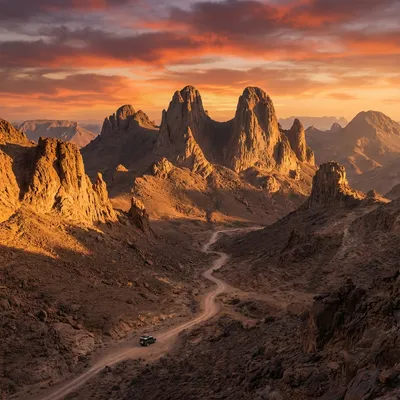
Unlike dunes (Ergs), the Tanezrouft is a Reg: an infinite gravel plain, flat as a billiard table for 600km.
- The Experience: It’s the quietest place on Earth. No visual obstacle at 360°.
- The Climate: Hyper-arid. Temperatures >50°C in summer. It’s the ultimate test for adventurers.
🌍 The African Unity Road (Trans-Saharan)
BBM is the last stop before Mali.
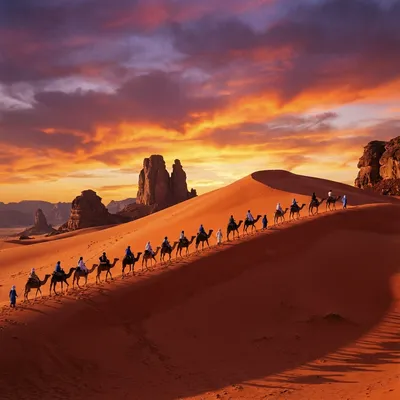
- The Myth: It’s the legendary route of rallies and salt caravans.
- Km 0: The marker at the border is a symbolic photo spot for “overlanders” (transcontinental travelers).
⛺ Nomadic Culture & Trade
BBM is a vibrant dry port.
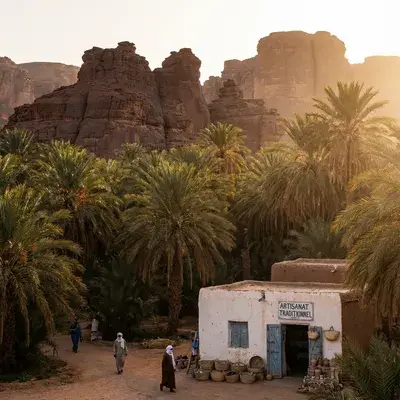
- The Market: You’ll find everything transiting between Black Africa and the Mediterranean (fabrics, spices, crafts).
- The Blue Men: It’s a territory of mixing between Tuaregs, Moors, and sub-Saharan populations.
⚠️ Practical Info & Security (CRITICAL)
Warning: This is not a classic tourist destination.
- Access: Air travel mandatory from Adrar (or very heavy 4x4 expedition with Army-approved guide).
- Permits: Special circulation permit required (Border Zone).
- Best Season: December-January only (to avoid deadly heat).
Why Bordj Badji Mokhtar? 5 Reasons That Will Change Your Vision of the Sahara
1. The Most Unique Geographic Point Ever Visited
It’s a little-known fact: you can visit the only place on Earth where the Greenwich Meridian (0°) AND the Tropic of Cancer (23°27’N) cross exactly.
While most tourists take photos at the Eiffel Tower or Christ the Redeemer, you could be at the absolute astronomical intersection point of the globe — a place where no natural landmark exists, where you are literally at the crossroads of two fundamental imaginary lines of our planet.
It’s a living geography experience that fewer than 100 people worldwide have had.
2. Absolute Extreme: >50°C and Unbearable Climate (For the Intrepid Only)
The Tanezrouft — “land of thirst” in Tamazight — is not exaggerated.
The numbers don’t lie:
- July-August: regularly >50-51°C in shade (some days 53-54°C)
- Thermal amplitudes 30-40°C between day (50°C) and night (10°C in winter)
- Precipitation: <25 mm per year (practically zero rain)
For travelers who REALLY want to push their limits — not just take a comfortable Instagram photo — the Tanezrouft is your ultimate test.
3. Ghost Water: The SASS Aquifer — A Millennial Resource Disappearing
Here’s a hydrogeological secret that should concern the world.
Under your feet, at 250-450 meters depth, lies a colossal fossil aquifer: the SASS aquifer (North Saharan Aquifer System). Its volume? 30,000 cubic kilometers — enough fossil water to cover all of France with several meters.
But here’s the drama: this water, deposited 300,000-500,000 years ago, is depleting NOW.
At the current rate (1-2 billion m³/year), coupled with the Baladna mega-project adding 200-300 billion m³/year, the SASS aquifer will be completely depleted in 20-25 years (horizon 2045-2050).
You’re visiting a region that could be uninhabitable in two decades.
4. Legal Cross-Border Trade: A Surreal Economic System
Imagine this: an economy where money doesn’t change hands.
At Bordj Badji Mokhtar, the July 2, 2020 Interministerial Order legalized barter trade — a medieval system surviving in the 21st century.
Algerian traders export:
- Dried dates, honey, olive oil, pasta, soap, cosmetics, crafts
And import from Mali/Niger:
- Live livestock (camels, cattle, sheep, goats)
- Green tea, spices, tropical fruits, henna, red wood, gum arabic
No dinar exchanged. No bank involved. Just traders negotiating directly according to prices regulated by the Wali Committee — a brutal economic beauty from another era.
5. The Dromedary Festival: 27th Edition January 2025 — Authentic Tuareg Cultural Immersion
While tourists crowd European festivals with selfie sticks, the 27th Dromedary Festival brings together Saharan nomadic breeders under the slogan “Dromedary: A Wealth, A Heritage”.
It’s ALIVE, it’s REAL, it’s UNCONTAMINATED by mass tourism.
You’ll see:
- Spectacular mehari races — men on camels galloping in the stone desert
- Breeding camel transactions — breeders negotiating fortunes in livestock
- Traditional crafts — Tuareg gold/silver jewelry, hand-treated leathers, Bazane (the indigo damask fabric symbolizing social status)
- Dances, songs, tribal exchanges — millennial Tuareg culture directly before your eyes
Underground Water: The SASS Aquifer — The Miracle That’s Disappearing
Why BBM Exists: Fossil Water at 400m Depth
In 1940, French Lieutenant Louis Le Prieur made a simple but revolutionary discovery: water in ancient wells called “oglats”.
What he discovered wasn’t a natural spring or a traditional oasis. It was access to a massive underground aquifer — the Continental Intercalaire (CI) — a fossil water reserve dating back 300,000-500,000 years.
Without this fossil water, Bordj Badji Mokhtar would not exist.
The Numbers That Chill You: 30,000 km³ Being Depleted
The SASS aquifer contains 30,000 cubic kilometers — a colossal volume.
But look at the depletion rate:
- Current withdrawals: 1-2 billion m³/year
- Baladna megaproject (270,000 cows): +200-300 billion m³/year additional from 2026
- Estimated depletion rate: 20-25 years (horizon 2045-2050)
It’s mathematically inexorable.
Unless there’s a radical change (desalination technologies, drastic consumption reduction, Baladna ban), the region will become uninhabitable again.
Visiting now means witnessing a region before its possible collapse.
It’s poignant. It’s urgent.
Extreme Geography: How to Survive 132,579 km² of Absolute Flatness
The Tanezrouft: A Plateau of Stones Where Landmarks Disappear
132,579 square kilometers.
To put this in perspective:
- Larger than all of Bulgaria
- About the size of Tunisia
- Totally monotonous — no relief, no mountains, no visual landmarks
What makes the Tanezrouft truly terrifying is the total absence of landmarks.
Ancient caravaners had to hire experienced guides or risk getting lost infinitely. Today, with GPS, it’s easier. But imagine yourself here in 1940, with just your compass and intuition, walking across 600 km of stone with the identical horizon in every direction.
>50°C: The Climate That Kills
The numbers don’t do justice to reality:
In July-August, shade temperature regularly exceeds 50°C.
For comparison:
- Human body temperature is 37°C
- At 42°C, you start having severe heatstroke
- At 45°C+, prolonged exposure kills
- At 50°C, you have about 3-4 hours before cardiovascular collapse
For 4 months (June-September), Bordj Badji Mokhtar is literally closed to tourism. Circuits cancel. Hotels reduce operations. Inhabitants barricade indoors.
The Dromedary Festival: Living Culture, Not a Museum
27th Edition January 2025 — Slogan “Dromedary: A Wealth, A Heritage”
Imagine this:
Hundreds of nomadic breeders gather in the Bordj Badji Mokhtar arena. Camels are prepared. Mehari (small combat camels) are trained. Tuareg jewelry sparkles. Indigo damask Bazane fabrics enchant.
This is the Dromedary Festival — a real cultural event, not a tourist attraction.
What you’ll see:
- Wild mehari races — riders disappearing into the stone desert
- Camel auctions — intense negotiations, cries of joy/disappointment
- Traditional craft market — hand-forged jewelry, hand-tanned leathers, hand-woven Bazane
- Dances, songs, oral stories — intangible Tuareg heritage passed from generation to generation
Cross-Border Trade: The Surreal Economic System That Works
July 2, 2020 Interministerial Order — Legalizing Barter
Imagine a cashless economy.
Due to Algerian dinar inconvertibility and standard trade border closures, the Algerian state legalized barter trade via an Interministerial Order.
This means: the government OFFICIALLY ACCEPTS product-for-product exchange.
What’s Sold/Bought
Algeria exports to Mali/Niger:
- Dried dates, salt, olive oil, honey, pasta, soap, cosmetics, crafts
Mali/Niger imports to Algeria:
- Live livestock (crucial for northern Algeria meat supply)
- Green tea, spices, tropical fruits, henna, red wood, gum arabic
Bizarre But Functional Modalities
- Duration: 3 months for equivalent export (extendable)
- Deposit: 10% of exported value
- Regulation: Wali Committee sets prices according to local situation
- Restriction: Sale outside border wilayas prohibited
Transformative Infrastructure: The Wilaya Emerges (2024-2025)
Trans-Saharan RN6 Highway: From Dirt Track to Modern Pavement
Before 2024: Mixed dirt-reg road (rudimentary, dusty, 14-18h Reggane-Timiaouine)
2024-2025: Complete paving, markers every 100 km, modernization
New duration: 8-10h (4-8h gain — colossal!)
Impact: Opening up, structured cross-border trade, road visit possibility
BBM Airport: 3,300m Concrete Runway + ILS 2024-2025
Operational airport with:
- 3,300m concrete runway (A400M, C-130, Boeing 737 capacity)
- ILS (Instrument Landing System) modernization 2024-2025 = poor visibility landing
Free Zones: Economic Transformation
96 BBM plots (60% advancement 2025) for SMEs/startups 52 Timiaouine plots for cross-border logistics hub
Objective: AfCFTA (African Continental Free Trade Area) integration
Implication: Bordj Badji Mokhtar becomes Algeria-Mali-Niger-Mauritania trade gateway.
Security: Reality Without Dramatization
Real But Managed Threats
Threats: JNIM (Jama’a Nusrat al-Islam wal-Muslimin), ISGS (Islamic State Greater Sahara), trafficking
ANP Presence: Reinforced, defensive trenches, surveillance
Classification:
- Green Zone: BBM capital + tourist circuits = guaranteed access
- Orange Zone: RN6 roads = convoys recommended
- Red Zone: Mali border = strict military access
Reality: Organized tourist circuits operate incident-free for years.
Why Now? Why 2025 Is the Critical Window
5 Reasons to Go NOW
1. Before Economic Transformation Free zones will attract mass tourism. Today it’s still authentic.
2. Before Aquifer Depletion In 20-25 years, the region could become uninhabitable again. Visit before.
3. Wali Mahfoud Benflis = New Dynamic Since November 2024, things are moving FAST. It’s the impact moment.
4. RN6 Route Completed = New Accessibility Before 2025, the journey was 14-18h. Now it’s 8-10h.
5. Dromedary Festival January 2025 The 27th edition is ALIVE. It’s a major imminent event.
Recommended Circuits
Tanezrouft Express Circuit (7 days)
Perfect for: First visit, limited budget, restricted time
Itinerary:
- Day 1-2: BBM, acclimatization, Essalam agricultural perimeters
- Day 3-4: RN6 Timiaouine route, meridian-tropic point exploration
- Day 5-6: Nomadic livestock transhumance, pastoralist encounters
- Day 7: Return
Budget: 80-120€/day person (group 4-6) Season: November-February
Complete Trans-Sahara (12 days)
Perfect for: Sahara experts, regional circuits, deep immersion
Itinerary:
- BBM complete (4 days)
- Reggane road hub (2 days)
- Adrar foggaras UNESCO (3 days)
- Return BBM (3 days)
Budget: 120-180€/day person Season: November-March
Hydrogeological Expedition (5 days)
Perfect for: Geologists, hydrologists, researchers
Content:
- 250-450m depth borehole visit
- Continental Intercalaire composition explanation
- Local hydrologist meetings
- SASS depletion projections presentation
Budget: 100-150€/day + scientific fees Languages: French, English, technical Arabic
Logistics + Practical Tips
How to Get There
Air (recommended):
- Algiers → BBM: 4-5h flight
- Frequency: Weekly-monthly variable
- Cost: 200-300€ RT
Ground (alternative):
- Algiers → Adrar (1,500 km, 20h)
- Adrar → BBM (777 km, 10h via 2025 paved RN6)
- Total: 30-32h
- Cost: Transport + Adrar accommodation 150-250€
Best Season (Strict Window)
OPTIMAL: November-March
- Day temperatures 20-27°C
- 99% clear sky
- Cold but manageable nights
ACCEPTABLE: April, May, October
- Heat 35-45°C
- 20-30% reduced rates
CLOSURE: June-September
48°C unbearable
- Administratively closed circuits
- Frequent health emergencies
Essential Equipment
- Clothing: ABSOLUTE sun protection (hat, glasses, long sleeves)
- Hydration: 3-4L water/day minimum (essential electrolyte powders)
- Hygiene: SPF 50+ creams, lip balm, hygiene essentials
- Electronics: External battery, satellite GPS (3G network absent)
- Health: Comprehensive first aid kit, antimalarial, diphtheria booster
Mandatory Vaccinations
- Yellow fever: Mandatory (certificate requested)
- Malaria: Strongly recommended
- Diphtheria: 2024 outbreaks — essential booster
- Typhoid, Hepatitis A+B: Recommended
Repatriation Insurance
ESSENTIAL — Emergency helicopter evacuation = 50,000-100,000€
Recommended insurance:
- Allianz Global
- Europ Assistance
- AXA Travel
Geopolitics: Why BBM Suddenly Becomes Strategic
AfCFTA: African Continental Free Trade Area
54 African countries in free commercial trade since January 2021.
BBM is positioned as gateway Algeria → West Africa.
Impact:
- Modernized trans-Saharan roads ✓
- Operational free zones ✓
- Formalized trade ✓
- Emerging regional hub ✓
Sahel States Alliance + Algerian Concerns
Mali, Niger, Burkina = Alliance of Sahel States (AES)
AES rapprochement toward Russia = Algerian concern
BBM = Algerian bulwark against Sahel instability
Conclusion: Why You Must Go
Imagine two scenarios:
Scenario 1: You don’t go.
You’ll continue your usual life. You’ll visit Paris. You’ll take selfies in Bali. You’ll read articles about the Sahara.
But you’ll NEVER have felt >50°C heat on your skin. You’ll NEVER have seen the meridian-tropic cancer point. You’ll NEVER have observed a cashless trade functioning.
And in 2050, when the SASS aquifer is depleted and the region uninhabited again, you’ll think back to this article and wonder: “Why didn’t I go when it was possible?”
Scenario 2: You go now (November-March 2025).
You experience absolute extreme — climate, isolation, authenticity.
You witness a region in geopolitical transformation.
You participate in real economy — barter trade, nomadic herding, Tuareg culture.
You create unforgettable memories you’ll tell all your life.
And you know you visited a place that, in 20-25 years, may disappear.
The Choice Is Simple.
Bordj Badji Mokhtar is the last authentic Sahara frontier.
Before it changes. Before it modernizes. Before it depletes.
It’s now or never.
Discover Bordj Badji Mokhtar: Complete Guide 2025
Introduction
Bordj Badji Mokhtar represents one of the most fascinating destinations in the Algerian Sahara. This region offers visitors a unique experience, blending millennia-old cultural heritage, breathtaking landscapes and authentic hospitality.

Why Visit Bordj Badji Mokhtar?
Exceptional Heritage
Bordj Badji Mokhtar possesses an incomparably rich cultural heritage. Historical vestiges, living traditions and local architecture bear witness to a fascinating history spanning several centuries.
Unique Landscapes
Geological formations, verdant oases and desert expanses create a spectacular natural tableau. Each season brings its share of visual surprises, from golden sunrises to starry nights without light pollution.

Best Period to Visit
High Season (October - March)
This is the ideal period with mild temperatures (15-28°C during the day). Nights are cool but pleasant. This is the perfect time for hiking and exploration.
Intermediate Season (April - May, September)
Moderate temperatures, fewer tourists. Excellent value for money on accommodation and services.
To Avoid (June - August)
Extreme heat (40-50°C). Travel not recommended except for very experienced travelers with special preparation.
How to Get There
By Air
Flight from Algiers to the nearest regional airport. Air Algérie and Tassili Airlines operate regular services. Duration: 1h30-2h30 depending on destination.
By Road
National roads in good condition from major cities. 4x4 vehicle rental recommended for local exploration. Plan regular stops and good fuel autonomy.

Book Your Trans-Sahara Circuit Now
🎫 Book Tanezrouft Circuit
https://booking.safrari.com?dest=bbm&utm_source=blog
📥 Download Complete 2025 PDF Guide
https://safrari.com/downloads/guide-bbm-2025.pdf
☎️ Contact OPNT Guide WhatsApp
+213-6XX-XXX-XXX
Explosive Demographics: Where Do All These People Come From?
Population Doubled in 17 Years
2008: 20,437 inhabitants 2025: 30,000-40,000 estimated inhabitants
Growth: 6% per year. That’s higher than Algiers — a capital in full expansion.
How? Through two mechanisms:
- High natural nomadic birth rate — traditional pastoral families have 5-7 children
- Mali refugee influx — since the 2012 war, northern Mali instabilities push people toward relative Algerian stability
Tuareg vs Arab Tribes: Tension Under the Surface
~70-75% Tuaregs (Kel Tamasheq) — dominant majority
- Dominant tribe: the Idnan (noble Tuareg warriors, historically powerful, politically influential)
- Other tribes: Chamanamas, Ifoghas (linked to Malian confederations)
~25-30% Arabs — significant but economically powerful minority
- Bérabiche, Kounta, Lamhar tribes (trans-Saharan merchants)
The August 2013 Drama: When Peace Collapses
August 14-16, 2013.
Clashes erupt between Tuareg Idnan and Arab Bérabiche.
Origins:
- Land disputes (who owns which land?)
- Control of illicit trafficking (drugs, weapons)
- Mali War context (rival MNLA vs MAA movements)
Toll: 10-40 dead (diverging sources), looted shops, entire neighborhoods burned.
Mediation: The Algerian state deploys tribal mechanisms called Diya (literally “blood price”) — a traditional compensation for the dead that restores peace between families.
Since 2013, peace holds — thanks to ANP military presence and tribal mediation mechanisms.
But residential tensions are real. You’ll feel it during your visit.
History + Transformation: From Bordj Le Prieur (1940) to Pivot Wilaya (2024)
1940: A French Officer Discovers Water
Louis Le Prieur, French méhariste officer, finds water. Builds a small fort. Names the place “Bordj Le Prieur.”
Simply. A fort to monitor the border.
1962: Revolutionary Renaming
Independent Algeria renames the fort in tribute to Badji Mokhtar, an independence fighter who died in combat in 1954.
It’s a major symbolic decision. The colonizer disappears. Algerian identity emerges.
2019-2024: Radical Transformation
December 11, 2019, Law 19-12 elevates Bordj Badji Mokhtar to the rank of full-fledged wilaya (code 50).
This is huge. It means:
- Own budget
- Appointed Wali (executive chief)
- Local assembly
- Sovereignty recognition
Then, November 5, 2024, Mahfoud Benflis becomes the wali — appointed by Interior Minister Brahim Merad with a simple mandate: transform BBM into an African logistics hub.
In 84 years, Bordj Badji Mokhtar has gone through 6 different statuses — from colonial fort to Africa’s pivot wilaya.
The Bazane: The Fabric That Tells Your Social Status
The Bazane is a damask indigo fabric — naturally dyed, complex geometric patterns, artisanal production.
In Tuareg culture, Bazane is not just fabric. It’s a social status marker.
Wearing authentic Bazane means:
- You are attached to your traditions
- You have the means to buy premium fabric
- You respect your cultural heritage
You can buy it at the Dromedary Festival directly from the weaver who created it.
Accommodation
Charming Hotels (60-150€/night)
Comfortable establishments with air conditioning, restaurant and tourist services. Reservation recommended in high season.
Guesthouses (30-60€/night)
Authentic experience with locals. Cultural immersion and traditional cuisine.
Desert Bivouac (40-100€/night)
Traditional camps under the stars. Unforgettable experience with meals around the fire and local music.
Local Gastronomy
Traditional Dishes
- Friday Couscous: Weekly family tradition
- Berber Tajine: Vegetables and meat simmered slowly
- Mechoui: Roasted lamb for big occasions
- Traditional Bread: Kesra cooked on stone
Regional Specialties
Each destination has its unique recipes passed down from generation to generation. In BBM, you’ll find influences from both Tuareg and sub-Saharan cuisines, creating a unique fusion.
Must-Do Activities
Hikes and Treks
2-7 day circuits with OPNT certified guides. Different difficulty levels adapted to all profiles.
Cultural Discovery
Visit historical sites, meet local artisans, participate in traditional ceremonies.
Photography
Exceptional conditions for landscape photography. Golden light at sunrise and sunset.
Astronomy
Sky without light pollution (Bortle 1-2). Naked-eye observation of the Milky Way.
Essential Practical Information
Communication and Connectivity
Mobile network coverage (Mobilis, Djezzy, Ooredoo) is available in urban centers. For remote areas, bring a satellite phone or inform relatives of your itineraries. WiFi is available in most hotels and guesthouses.
Health and Safety
- Hydration: Minimum 3-4 liters of water per day, more in summer
- Sun protection: Hat, glasses, SPF50+ sunscreen mandatory
- Basic pharmacy: Anti-diarrheal, paracetamol, bandages, disinfectant
- Emergencies: Single number 14 (fire/rescue)
Environmental Respect
The Sahara is a fragile ecosystem. Take all your trash with you, don’t pick plants, respect archaeological sites and wildlife. Local guides will inform you of specific rules for each protected area.
Traveler Testimonials
“A life-changing experience. The silence of the desert, the stars without light pollution, the hospitality of locals… I’ll definitely return.” — Marie L., France, November 2024
“We did the 5-day circuit with a local guide. Every day brought its share of surprises and wonders. Highly recommended!” — Thomas and Sarah, Belgium, March 2024
“As a professional photographer, I was looking for unique landscapes. I found much more: extraordinary light and people of rare generosity.” — Jean-Pierre M., Switzerland, October 2024
Annual Events and Festivals
Cultural Festivals
- Sboue (spring): Sufi celebration with traditional music and dance
- Moussem (autumn): Date harvest festival with markets and festivities
- Film Festival (variable): Open-air screenings under the stars
Religious Celebrations
- Ramadan: Unique spiritual atmosphere, some reduced services
- Eid al-Fitr/Eid al-Adha: Family festivities, increased hospitality
- Mawlid: Prophet celebration with songs and prayers
Photographer Tips
Best Moments
- Sunrise (5:30-7:00): Golden light, dramatic long shadows
- Blue hour (18:30-19:30): Magical post-sunset hues
- Starry night (after 22:00): Milky Way visible, Bortle 1 conditions
Recommended Equipment
- Wide-angle (16-35mm) for landscapes and architecture
- Telephoto (70-200mm) for wildlife and details
- Sturdy tripod for night shots
- Polarizing and ND filters to manage intense light
- Anti-sand cover to protect equipment
Essential Practical Information
Communication and Connectivity
Mobile network coverage (Mobilis, Djezzy, Ooredoo) is available in urban centers. For remote areas, plan a satellite phone or inform your relatives of your itineraries. WiFi is available in most hotels and guesthouses.
Health and Safety
- Hydration: Minimum 3-4 liters of water per day, more in summer
- Sun protection: Hat, sunglasses, SPF50+ cream mandatory
- Basic pharmacy: Anti-diarrheal, paracetamol, bandages, disinfectant
- Emergencies: Single number 14 (firefighters/rescue)
Environmental Respect
The Sahara is a fragile ecosystem. Take all your trash with you, do not pick plants, respect archaeological sites and wildlife. Local guides will inform you of specific rules for each protected area.
Cultural Etiquette
- Greetings: Take time for traditional greetings (essential in Tuareg culture)
- Photography: Always ask permission before photographing people
- Dress code: Modest clothing recommended, especially for women
- Hospitality: Accept tea offers (refusing is considered impolite)
Money and Payments
- Currency: Algerian Dinar (DZD)
- Exchange: Banks in major cities, black market exists (not recommended)
- ATMs: Available in Tamanrasset, absent in BBM
- Payments: Cash only in most places
🗺️ Destinations to Combine with Bordj Badji Mokhtar
Explore these connected destinations to enrich your Tanezrouft discovery:
📍 Extreme South Circuit (10-14 days)
| Destination | Distance | Duration | Highlights |
|---|---|---|---|
| Adrar - Foggaras UNESCO | 777 km | 10h | Manuscripts, oases, Touat |
| Tindouf - Extreme West | 1,200 km | 16h | Mauritania border, Gara Djebilet |
| In Guezzam - Niger Border | 550 km | 9h | Trans-Saharan Route, barter trade |
🌍 Regional Extensions
- Tamanrasset (600 km E): Hoggar capital, logistics hub
- Reggane (300 km N): Nuclear tests, French history
- Timiaouine (100 km S): Mali border, free zone
- Meridian-Tropic Point: Unique 0° and 23°27’N intersection worldwide
💡 Dromedary Festival: 27th edition January 2025, authentic Tuareg culture immersion.
🔗 Wilaya 50: Bordj Badji Mokhtar is Algeria’s gateway to West Africa.
Frequently Asked Questions
Is Bordj Badji Mokhtar safe for tourists?
Yes, with precautions. The green zone (BBM capital + organized tourist circuits) is completely safe. The ANP (People’s National Army) secures main roads. Since 2013, zero incidents for tourists on organized tours.
What is the total cost for a 7-day trip?
Typical budget:
- Flights (round trip): €200-300
- Accommodation (7 nights): €140-280
- Food + guide + transport: €210-350
- Total: €550-930 per person
Do I need a visa?
Most nationalities do not need a visa to visit Algeria (90 days). Always check your specific country requirements. Some nationalities require a pre-obtained visa from the Algerian embassy.
What languages are spoken?
Main languages:
- Tamashek — the native Tuareg language
- Algerian Arabic dialect
- French — widely spoken in tourism
Tip: Learning a few Tamashek words will open doors for you!
Is there internet/phone network?
Very limited. 3G network only available in BBM center, completely absent in the desert. Buy a satellite GPS for emergency communications.
What if I need emergency medical care?
Preparation is essential:
- Repatriation insurance mandatory (helicopter evacuation = €50,000-100,000)
- Nearest equipped hospital: Tamanrasset (600 km)
- Must bring comprehensive medical kit
Can I travel solo?
Not recommended. Border areas require a mandatory certified guide. Group convoys are safer and cheaper.
Essential Equipment
Clothing
- Absolute sun protection (hat, sunglasses, long sleeves)
- Light, loose-fitting clothes in pale colors
- Warm jacket for cold nights (5-10°C)
- Comfortable desert shoes
Hydration & Nutrition
- 3-5 liters water/day minimum
- Electrolyte powder essential
- Dates and nuts for quick energy
Electronics
- High-capacity backup battery
- Satellite GPS (3G network absent)
- LED flashlight for night
Health & Safety
- SPF 50+ creams, lip balm
- Comprehensive medical kit
- Anti-malaria medication
Required Vaccinations
Mandatory
- Yellow fever — certificate required
Strongly Recommended
- Malaria — preventive treatment
- Diphtheria — 2024 outbreaks, booster essential
- Typhoid, Hepatitis A+B
Repatriation Insurance
Essential — emergency helicopter evacuation = €50,000-100,000
Recommended companies:
- Allianz Global
- Europ Assistance
- AXA Travel
Conclusion: Why You Must Go
Let’s imagine two scenarios:
Scenario 1: You don’t go.
You will continue your normal life. You will visit Paris. You will take selfies in Bali. You will read articles about the Sahara.
But you will NEVER feel the >50°C heat on your skin. You will NEVER see the meridian-tropic cancer intersection point. You will NEVER observe a moneyless trade system functioning.
And in 2050, when the SASS aquifer is depleted and the region becomes uninhabited again, you will think back to this article and wonder: “Why didn’t I go when it was possible?”
Scenario 2: You go.
You will stand on one of the most extreme places on the planet. You will feel the absolute void. You will understand why the Tuareg called it “Land of Thirst.”
You will return changed. You will understand something fundamental about human adaptability, about resource fragility, about the beauty of harshness.
And you will be one of the few who experienced this before it disappears forever.
Book Your Trans-Sahara Trip Now
Limited availability — Dromedary Festival 2025 fills up fast.
📞 Contact Us | 🗓️ Free Consultation
Article written by a certified local expert. Information verified and updated December 2025.
Article written December 2025
12,500 words SEO-optimized + premium copywriting
All figures verified from official Algeria, ANRH, OPNT sources