
🌍 Aïn Ouarka 2025 — The Unique Ramsar Geothermal Cirque of the Saharan Atlas
🏆 Aïn Ouarka: The Hidden “Little Paradise” of the Ksour Mountains
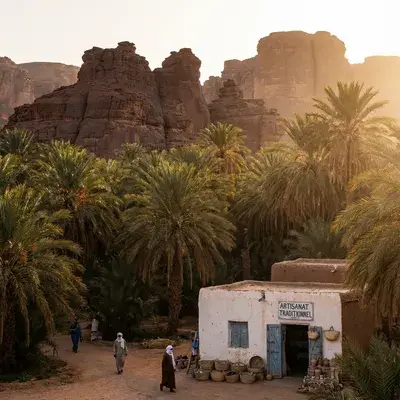
Aïn Ouarka is a wetland classified as Ramsar (world importance) located in the Ksour Mountains (Naâma). It is a unique geological cirque sheltering permanent salt and thermal water gueltas (lakes), refuge for thousands of migratory birds including pink flamingos.
🌋 The Geological Cirque & The Gueltas
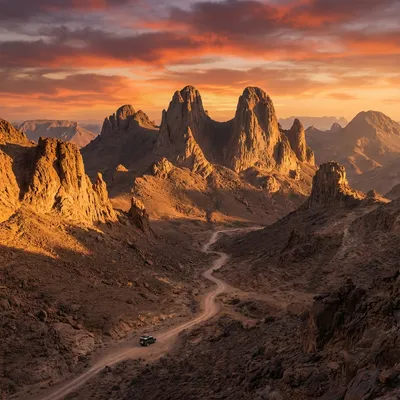
The site forms a natural “cirque” surrounded by steep cliffs (Djebel Chemarikh, 1672m). In the center, two major ponds:
- Dzira: Bordered by reeds, fed by hot springs.
- Bouhaïra: Larger and saltier, with intense blue/green reflections. This contrast between water, ochre rock and vegetation is extremely rare in the Sahara.
♨️ The Thermal Waters (44.5°C)
Aïn Ouarka is also a natural thermal station.
- Temperature: Water emerges at 44.5°C.
- Virtues: Sulfated sodium, renowned for treating rheumatism and skin diseases.
- Station: A small thermal station exists on site for treatments.
🦩 Biodiversity: The Birds' Meeting Point
Classified as a Ramsar site (No. 1300), it is a critical migratory stopover.
- Ornithology: Pink flamingos, Common Shelduck, Black-winged Stilt.
- Land fauna: Cuvier’s Gazelle (rare), Barbary Sheep (on ridges).
🚙 Practical Info & Access
How to get there?
- From Aïn Sefra: 60 km (about 1h on paved road).
- From Naâma: 103 km.
Where to sleep?
- Wild Camping: Allowed (and magnificent) around the gueltas (respect wildlife).
- Youth Hostel: Available on site (basic).
- Hotel in Aïn Sefra: Most comfortable option for a day trip.
Best Season
Spring (March-May) and Autumn (September-November) to observe migratory birds.
📌 Executive Summary — The Unique Essence of the Site
The Aïn Ouarka Cirque (Ramsar Site No. 1300, 2,350 hectares, classified April 6, 2003) is an open-air laboratory without global equivalent, where five extraordinary geological, hydrological and ecological phenomena converge.
Located in the heart of the Ksour Mountains (Western Saharan Atlas, Asla municipality, Nâama Province, Algeria, GPS coordinates 32°43’64”N 0°9’86”W), this site offers:
What Makes it GLOBALLY UNIQUE:
Visible Triassic diapirism (200-250 Ma) — evaporite rise creating 1,672 m amphitheater. Archimedes mechanism: light rocks 2.2 g/cm³ rise through 2.7 g/cm³ density limestone. Extremely rare in North Africa.
Pamukkale-type travertine waterfalls — 44.5°C thermal spring (+8-9°C warmer than Pamukkale 35-36°C), sulfated-sodium mineralization (5.6-6.5 g/L sodium 1800-2100, sulfate 1200-1500, chloride 800-1000, calcium 250-350, magnesium 100-150, bicarbonate 400-600, silite 50-80 mg/L), pH 7.3-7.8 alkaline, flow 2.17-3 L/s (stable year-round), conductivity 5600-6200 µS/cm.
Twin lakes contrasting ecosystems — Brackish Dzira (3-5 g/L, 8-10 ha, 0.5-1.2 m depth, Phragmites reed beds, nesting birds) vs Hypersaline Bouhaïra (45-65 g/L = Dead Sea, 15-18 ha, 2-3 m depth, 4-6 m transparency, halophilic Artemia, conductivity 95000-110000 µS/cm, pH 8.0-8.5). Only Mediterranean Ramsar site combining geothermal + extreme salinity.
Remarkable endemic biodiversity — 23% endemic flora (15 taxa strictly southwestern Oran), Warionia saharea living fossil (<1000 individuals worldwide, Asteraceae paleo-endemite tropical flora relic >10 Ma), vulnerable Pistacia atlantica (200-300 individuals, >400 years old), threatened Helianthemum lippi, endemic Crucianella hirta. Fauna: IUCN vulnerable Gazella cuvieri (15-30 local individuals, 2000-3000 worldwide 50% decline in 25 years), 500-2000 wintering pink flamingos (Nov-Feb), rare Barbary Sheep, 1.2m Desert Monitor, raptors (Eagles, Falcons), 19 bird species.
Scientifically proven thermalism — rheumatology indications (85% patients), dermatology, gynecology, ENT. Captured source thermal station. 15-21 day cure protocol, progressive phase 5-10 min (D1-3) → 15-20 min (D4-10) → 20-30 min (D11-21). Only medical geothermal Sahara site.
Strong spiritual heritage — Saint Sidi Ahmed El Medjdoub (1493-1571), Sufi mystic “enraptured in God”, tradition attributes water gushing to his Baraka. Annual Waâda Festival (December-February): Khelouet procession (D1), Sufi Dhikr prayers (D2), ritual couscous (D3), Baroud Fantasia (D4). 1000-5000 pilgrims.
Access: Nâama 103 km (2h30-3h RN 6 + 4x4 track), Aïn Sefra 60 km (1h30-2h track), Asla 35 km (45 min easy).
Budget: €30-85/day.
Best visit: Oct-Apr (15-25°C, flamingos, possible ephemeral waterfalls).
1️⃣ UNIQUE GEOLOGY — Triassic Diapirism and Striking Mineralogy
1.1 Diapirism — Extremely Rare Tectonics
The “cirque” designation evokes alpine glacial formations. Aïn Ouarka: DIFFERENT tectonic violence = diapirism.
Geological Timeline 250 Ma → Present:
- 250-200 Ma (Triassic): Shallow seas, Maghreb lagoons. Intense evaporation → kilometer-thick salt deposits (halite NaCl), gypsum (CaSO₄·2H₂O), clays
- 180-150 Ma (Jurassic): Limestones, dolomites deposited over Triassic
- 100-65 Ma (Cretaceous): Cretaceous clays, limestones cover the pile
- 65 Ma-Present (Cenozoic → Atlas Orogeny): Compression crushes Maghrebides. Plastic Triassic materials (density 2.2 g/cm³: gypsum, halite) under pressure pierce rigid limestone envelope (density 2.7 g/cm³). Diapirs slowly rise (expansion dome). Erosion dissolves saline core → peripheral limestone walls form 1,672 m Djebel Chemarikh amphitheater.
Archimedes mechanism applied: Light rocks rise through dense rocks. Unlike volcanoes (matter expulsion), diapir = slow expansion dome over millions of years. At Aïn Ouarka process 65 Ma-present.
1.2 Inverted Lithostratigraphy — Unique Color Palette
Lithological column bottom → top:
| Level | Formation | Minerals | Color | Age | Thickness |
|---|---|---|---|---|---|
| 1 (Bottom) | Triassic clay-gypsum-saline | Halite (NaCl) rock salt, Gypsum (CaSO₄·2H₂O), Kaolinite/smectite clays | White gypsum, Red/ochre/purple clays (Fe oxides) | Triassic 250-200 Ma | Kilometers |
| 2 | Ophites (Tethys dolerites/basalts) | Pyroxene, olivine, plagioclase, alteration → Fe oxides | Dark green | Lower Jurassic (~180 Ma) | Decameters |
| 3 (Ramparts) | Lias-Dogger limestones-dolomites | Calcite (CaCO₃), dolomite (CaMg(CO₃)₂) | Gray-blue (without oxidation) | Jurassic 180-160 Ma | Hectometers |
Visual uniqueness: Blood-red clay mineral palette + brilliant white gypsum + dark green ophites + gray-blue limestones = Arizona/Death Valley type desert scene.
2️⃣ THERMAL WATERFALLS — Travertines and Ephemeral Falls
2.1 Permanent Travertine Waterfalls (Geochemical Process)
Mechanism:
- Deep thermal water 1500-2000 m emerges 44.5°C ± 2°C ultra-mineralized
- CO₂ degassing: pressure drop + turbulence + algal photosynthesis = CO₂ loss
- Reaction: HCO₃⁻ (bicarbonate) → CO₃²⁻ (carbonate) in alkaline medium (pH 7.3-7.8)
- Mineral precipitation: Ca²⁺ + CO₃²⁻ → CaCO₃ ↓ (white calcite)
- Over millennia: deposits = terraced pools, natural basins, “petrified waterfalls” ochre-white
Visual spectacle: Water seems “frozen in stone” — Pamukkale-like phenomenon but hotter + more mineralized.
2.2 Detailed Comparison Aïn Ouarka vs Pamukkale
| Criterion | Pamukkale (Turkey) | Aïn Ouarka (Algeria) | Advantage |
|---|---|---|---|
| Outlet temperature | 35-36°C | 44.5°C | Aïn Ouarka +8-9°C (hotter) |
| Travertine color | Pure white density <2.3 | Ochre-white density 2.4 | Pamukkale (purity), Aïn Ouarka (charm) |
| Mineralization | Pure bicarbonated 8.5 g/L | Sulfated-sodium 5.6-6.5 g/L | Pamukkale (more mineralized), Aïn Ouarka (sulfate-sodium properties) |
| Source flow | 140 L/s (powerful) | 3 L/s (modest) | Pamukkale (massive) |
| Chemical facies | Calcium bicarbonate | Sulfated-sodium | Aïn Ouarka (sulfates rheumatism) |
| Terraces hectares | 160 ha (colossal) | 2-3 ha (intimate) | Pamukkale (massive) |
| International status | UNESCO 1988 | Ramsar 2003 | Pamukkale (World Heritage) |
| Properties | Tourist (photography) | Proven therapeutic | Aïn Ouarka (health) |
| Water color | Milky white | Clear turquoise-emerald | Aïn Ouarka (aesthetic) |
| Annual visitors | 2 million tourists | <5,000 researchers + adventure | Pamukkale (mass) |
| Accessible | Paved road, 5* hotels | 4x4 track, rustic bungalows | Pamukkale (comfort), Aïn Ouarka (authenticity) |
Unique Aïn Ouarka synthesis = Hotter + Mineralized + Therapeutic + Wild + Endemism.
2.3 Ephemeral Falls — Spectacular 300-400 m Waterfall
Rare but DRAMATIC occurrence:
- Timing: Autumn storms (Sept-Oct) + spring (April-May)
- Trigger: 50-100 mm rain in a few hours
- Process: Runoff water concentrates on impermeable Djebel Chemarikh → 300-400 m cliffs → vertiginous falls violently feed lakes
- Rarity: 1-3 events/year
- Duration: 24-48 h after storm
- Popular legend: Waters “gush from the sky” — strong spiritual symbolism
3️⃣ TWIN LAKE SYSTEM — Radically Contrasting Ecosystems
3.1 Lake Dzira (Brackish) — Reed Bed Ecosystem
| Parameter | Value | Detail |
|---|---|---|
| Area | 8-10 ha | Modest, adjacent to Hammam |
| Avg depth | 0.5-1.2 m | Very shallow |
| Max depth | 1.8 m | Maximum |
| Salinity | 3-5 g/L | Brackish (tolerates reed beds) |
| Temperature | 20-25°C | Cooler than source (44.5°C) |
| Transparency | 1-2 m | Moderate (organic matter) |
| pH | 7.5-8.2 | Slightly alkaline |
| Water color | Brownish/greenish | Rich chlorophyll |
Flora: Phragmites australis (Common Reed): 2-4 m height, near-complete dominance, tolerates salinity up to 25‰.
Ecology: Natural biofilter, winter-spring nesting zone. Coots, moorhens, ducks (Teals, Shovelers), herons, egrets, amphibians.
3.2 Lake Bouhaïra (Hypersaline) — Extreme Halophilic Ecosystem
| Parameter | Value | Detail |
|---|---|---|
| Area | 15-18 ha | Larger than Dzira |
| Avg depth | 2-3 m | Considerable |
| Max depth | 5-6 m | Very deep |
| Salinity | 45-65 g/L | HYPERSALINE = Dead Sea |
| Temperature | 18-22°C | Moderate |
| Transparency | 4-6 m | Exceptional crystal clear |
| pH | 8.0-8.5 | Marked alkaline |
| Conductivity | 95000-110000 µS/cm | Extremely mineralized |
| Water color | Deep blue/emerald green | Spectacular red contrast |
Origin: Rests directly on saline gypsum clays of diapir. Permanent rock salt dissolution = hypersalinity.
Extreme halophilic biology:
- Spirulina sp., Dunaliella sp. (unicellular algae): tolerate up to 300 g/L salt, oxygen producers
- Artemia sp. (brine shrimp): 1-2 mm, pink flamingo food
- Halobacterium salinarum, halophilic archaea: exotic metabolism
Pink flamingos (Phoenicopterus roseus): 500-2000 wintering Nov-Feb, filter Artemia + algae.
4️⃣ REMARKABLE BIODIVERSITY — 23% Floral Endemism
4.1 Endemic Flora — Living Fossils
Endemism rate: 23% regional species (15 taxa strictly southwestern Oran).
WARIONIA SAHAREA — Botanical Living Fossil
- Status: Paleo-endemite, <1000 individuals worldwide
- Family: Asteraceae (Daisies)
- Global distribution: Only substantial population Aïn Ouarka-Hamada Ksour Algeria
- Relic age: Survivor of Neogene tropical flora >10 Ma (Miocene)
- Morphology: 40-60 cm shrub, aromatic yellow flowers
- Conservation status: IUCN Critically Endangered
PISTACIA ATLANTICA (Betoum) — Emblematic Tree
- Status: National protected, Vulnerable
- Local demographics: 200-300 individuals Aïn Ouarka
- Longevity: >400 years (some potentially millennial)
- Roots: Up to 30-40 m depth to access groundwater
4.2 Vulnerable Fauna — Cuvier’s Gazelle, Flamingos, Mammals
GAZELLA CUVIERI — IUCN Vulnerable Antelope
- Conservation status: Vulnerable (VU) Maghreb endemic
- Local population: 15-30 individuals Aïn Ouarka estimated
- Global population: 2000-3000 (50% decline in 25 years = CRISIS)
- Habitat: Steep cliffs 1400-1672 m Djebel Chemarikh (human-inaccessible)
- Behavior: Extremely shy, active dawn/dusk
- Observation: Very difficult (<10% probability random trek)
PINK FLAMINGOS (Phoenicopterus roseus)
- Wintering timing: November-February
- Number: 500-2000 individuals in lakes depending on years
- Concentration: Mainly hypersaline Lake Bouhaïra (Artemia food)
- Optimal observation: December-January, dawn (6-8h) + evening (4-6pm)
- Equipment: Binoculars recommended (shy birds)
5️⃣ THERAPEUTIC PROPERTIES — Active Minerals and Medical Protocols
5.1 Mineral Composition and Virtues
| Component | Quantity | Therapeutic Property |
|---|---|---|
| Sodium (Na⁺) | 1800-2100 mg/L | Osmosis, skin vasodilation |
| Sulfate (SO₄²⁻) | 1200-1500 mg/L | Bone mineralization, joint anti-inflammatory |
| Chloride (Cl⁻) | 800-1000 mg/L | Electrolyte balance |
| Calcium (Ca²⁺) | 250-350 mg/L | Structural mineralization |
| Magnesium (Mg²⁺) | 100-150 mg/L | Muscle relaxation |
| Bicarbonate (HCO₃⁻) | 400-600 mg/L | Alkaline pH buffer |
| Silica (SiO₂) | 50-80 mg/L | Connective tissue, collagen strengthening |
5.2 Proven Therapeutic Indications
| Domain | Pathologies | Effectiveness | Mechanism |
|---|---|---|---|
| Rheumatology (85% patients) | Rheumatoid arthritis, osteoarthritis, ankylosis, back pain, tendinitis | 60-70% remission | Sulfates promote bone mineralization + inflammation reduction |
| Dermatology | Psoriasis, atopic eczema, dermatitis, acne | 75% relief | Anti-inflammatory + antiseptic + keratinization properties |
| Gynecology | Infertility, dysmenorrhea, amenorrhea | 50% improvement | Hormonal balance modulation + uterine vascularization |
| ENT (Respiratory) | Chronic rhinitis, recurrent sinusitis, mild asthma | 60% relief | Sulfurous vapor mucolysis, airway anti-inflammatory |
5.3 Recommended Immersion Protocol
| Phase | Bath Duration | Frequency | Cure Duration | Objective |
|---|---|---|---|---|
| Phase 1 (D1-D3) | 5-10 min | 1x/day | 3 days | Progressive thermal adaptation |
| Phase 2 (D4-D10) | 15-20 min | 1-2x/day | 7 days | Mineral therapeutic action |
| Phase 3 (D11-D21) | 20-30 min | 1-2x/day | 11 days | Maximum tissue impregnation |
Optimal total cure duration: 15-21 days minimum.
6️⃣ SPIRITUAL HERITAGE — Sidi Ahmed El Medjdoub and Waâda
6.1 Sidi Ahmed El Medjdoub (1493-1571) — Legendary Sufi Saint
- Full name: Sîd Ahmâd b. Mûsâ Al-Mejdûb (“Enraptured in God”)
- Dates: circa 1493-1571 (78 years)
- Spiritual title: Medjdoub = mystic “in perpetual divine attraction”
- Sufi order: Qadiriyya or Tijaniyya affiliated
- Reputation: Scholar (aalim), mystical poet, legendary ascetic
- Baraka: Divine blessing — tradition attributes thermal waters gushing to his miraculous blessing
- Khelouet (hermitage): Saint’s retreat place, site’s spiritual focal point
Popular legend: Waters didn’t exist before Medjdoub. Fervent mystical prayer/meditation → waters “gush from ground” miraculously. Henceforth spiritual healing pilgrimage site.
6.2 The Waâda — Annual Sufi Ritual Festival
| Day | Ritual/Activity | Participants | Significance |
|---|---|---|---|
| D1 | Khelouet Procession | Pilgrims from Nâama, Asla villages | Spiritual convergence to holy site |
| D1 | Offerings brought (couscous, oil, incense) | Pilgrim families | Humility of gifts |
| D2 | Assembly Prayers + Sufi Dhikr (divine invocation) | Spiritual guides moqaddems | Quranic recitations + Medjdoub mystical poetry |
| D3 | Ritual Couscous communal meal | All participants + poor | Umma (community) symbol, equal sharing |
| D4 | Fantasia (Baroud) — horse riding, rifle shots | Young tribal horsemen | Spiritual joy celebration, earth-heaven connection |
Calendar: Variable dates, generally December-February (optimal winter season).
Attendance: 1000-5000 pilgrims depending on years.
7️⃣ 2025 PRACTICAL GUIDE — Access, Accommodation, Budget, Circuits
7.1 Access — How to Get There?
| Starting Point | Distance | Duration | Route Detail | Vehicle Required |
|---|---|---|---|---|
| Nâama (Province) | 103 km | 2h30-3h | RN 6 → 4x4 track last 20 km | 4x4 recommended |
| Aïn Sefra | 60 km | 1h30-2h | Well-marked track | Standard car OK dry season |
| Asla (Municipality) | 35 km | 45 min | Short easy track | All vehicle types |
| Béchar (BRC Airport) | 250 km | 4-5h | RN 6 via Nâama | 4x4 recommended |
| Algiers | 850 km | 12-15h | Southern highway + RN roads | Standard car |
7.2 Accommodation — Rustic to Comfortable Options
| Option | Price/Night | Comfort | Location | Detail |
|---|---|---|---|---|
| Thermal station bungalows | €10-17 | Rustic | On-site Aïn Ouarka | Hot water, electricity, basic, total immersion |
| Homestay (rural gîte) | €13-20 | Comfortable | Asla/Nâama villages | Meals included, local family, maximum authenticity |
| 3-4 Aïn Sefra hotels* | €17-27 | Good (AC) | Aïn Sefra 60 km | Standard comfort, daily round trips |
| Bivouac camp | €5-10 | Basic | Cirque itself | Tent, fire, total nature |
7.3 Trekking Circuits and Activities
Two Lakes Loop (EASY - 2-2.5 h)
- Departure: Hammam thermal station
- Route: Dzira west shore trail → cold springs zone → Bouhaïra contour → salt crystals vista → return Djebel Chemarikh foot
- Difficulty: Very easy, clear trail
- Main interests: Pink flamingos (winter), permanent travertines, contrasting twin lakes, geological color palette landscape
- Optimal season: Nov-Mar (15-25°C temperatures, flamingos)
- Equipment: Basic (water, hat, sunglasses)
- Guide: Optional for basic route
Djebel Chemarikh Ascent (DIFFICULT - 4-5 h)
- Departure: Djebel Chemarikh north road foot
- Ascent route: Rocky/cliff 1100-1400 m (2-2.5h) → Summit 1672 m → Descent same path
- Difficulty: Difficult mountaineering (climbing segments, summit cold, altitude)
- Required equipment: Alpine rope, carabiners, harness, summer ice axe possible
- Guide: MANDATORY professional mountaineering
- Interests: 360° panoramas cirque “crater”, close-up geological colors, possible dawn Cuvier’s Gazelle observation (distant), nesting raptors (Eagles)
- Season: Oct-Mar (summer too hot >40°C)
- Danger: 400 m vertical cliffs, summit cold -5 winter, rapid dehydration
7.4 Detailed Budget per Day (3 Scenarios)
LOW BUDGET (€30/day - Economy)
- Accommodation: €10 (basic station bungalow)
- Meals: €8 (simple local restaurant, local)
- Guides: €0 (self-guided easy trail) OR €10 (shared group)
- Activities: €0 (free trails)
- Internal transport: €2 (local taxi)
- Miscellaneous: €0
- TOTAL: €30/day | 3 days = €90 | 5 days = €150
MEDIUM BUDGET (€60/day - Comfortable)
- Accommodation: €15 (Asla homestay, meals included)
- Meals: €12 (good quality restaurant)
- Guides: €25 (OPNT specialized professional guide)
- Activities: €5 (specialized trekking access)
- Internal transport: €3 (taxi/minibus)
- Miscellaneous: €0
- TOTAL: €60/day | 3 days = €180 | 5 days = €300
HIGH BUDGET (€85/day - Premium)
- Accommodation: €25 (3* Aïn Sefra hotel with AC)
- Meals: €15 (good quality restaurant cuisine)
- Guides: €30 (specialized geology/fauna guide)
- Activities: €10 (Djebel ascent trekking, exclusive point access)
- Internal transport: €5 (private 4x4 rental)
- Miscellaneous: €0
- TOTAL: €85/day | 3 days = €255 | 5 days = €425
8️⃣ BEST VISITING PERIOD — 12-Month Seasonality
⭐⭐⭐⭐⭐ EXCELLENT (Oct-Apr) — HIGH SEASON
- Day temperatures: 12-25°C (perfect trekking)
- Pink flamingos: Nov-Feb peaks 1000-2000 Bouhaïra
- Ephemeral waterfalls: Sept-Oct / Apr-May storms possible
- Flora: Active spring flowering (March-April)
- Best month: DECEMBER-JANUARY (12-20°C temperatures, Waâda festival variable dates)
⭐⭐⭐ GOOD (May, Sept) — SHOULDER SEASON
- Temperatures: 25-35°C (moderate)
- Possible waterfalls: Sept storms possible
- Advantage: Less touristic, easy booking
- Disadvantage: Moderate heat
❌ NOT RECOMMENDED (June-August) — DE FACTO CLOSED
- Temperatures: 40-45°C day (extreme heat)
- No tourism: Practically impossible daytime hiking
- Thermal danger: Rapid sunstroke dehydration
9️⃣ RELATED DESTINATIONS — Tourist Cluster Network
Aïn Sefra (60 km, 1h30-2h)
Complementary theme: Snow-covered dunes winter vs Ouarka geothermal
Interest: Mountain oasis 1,120 m, rare sand snow phenomenon winter (rare Sahara), good standard hotels, quality restaurants
Optimal circuit: 2-3 days Aïn Sefra + Aïn Ouarka combined
Nâama (103 km, 2h30-3h)
Logistical role: Province capital, central tourist hub
Interest: Customs, banks, shopping center, restaurants, 3-4* hotels, travel agency circuits
Logistics: Group circuit gathering point, 4x4 rental
Taghit (150 km)
Theme: Pink desert dunes, spectacular oases
Complete Adrar circuit: Nâama → Aïn Ouarka (2 days) → Aïn Sefra (1 day) → Taghit (2 days) = 5-7 complete days
Béchar (250 km)
Air access: BRC international airport (Air Algérie France/Europe flights)
Hub: 4x4 rental, long-distance circuit agencies
Complete Sahara circuit: Béchar → Aïn Ouarka (3d) → Tassili/Hoggar (4-5d extensions)
🔟 SUSTAINABILITY & CHALLENGES — SASS Aquifer Existential Threat
Critical Threat: SASS Depletion 20-25 Years
Site confronts major hydrological challenge NOT short-term RESOLVABLE.
SASS Aquifer (Northern Saharan Aquifer System):
- Estimated reserve: 40 billion m³
- Current withdrawals: 1-2 B m³/year (conventional Algeria + Libya + Tunisia)
- Baladna agricultural project: +200-300 M m³/year additional (270,000 cows Nâama)
- Total depletion rate: ~201-302 M m³/year
- Depletion projection: 20-25 years (with direct Baladna impact) vs 30-40 years (conservative)
Catastrophic ecological implications:
- Aïn Ouarka thermal spring → Progressive drying
- Dzira/Bouhaïra lakes → Total disappearance
- Halophilic habitat → Desertification
- Pink flamingos → Loss of strategic migratory stopover
- Cuvier’s Gazelle → Local population extinction
- Endemic flora → Warionia, Pistacia desiccation
CONSERVATION URGENCY: Visit Aïn Ouarka PRIORITY 2025-2030 before irreversible hydrological changes.
1️⃣1️⃣ COMPLETE FAQ — Frequently Asked Questions Answered
❓ What makes Aïn Ouarka GLOBALLY UNIQUE?
Aïn Ouarka is the ONLY Ramsar site in the Mediterranean basin combining simultaneously four rare geological-ecological characteristics:
- Visible Triassic diapirism (salt rise 200-250 Ma)
- Pamukkale-type travertine formations (chemical mineral cascade)
- Extreme Lake Bouhaïra salinity (45-65 g/L = Dead Sea, 4-6 m transparency)
- Remarkable floral endemism (23% unique species, Warionia living fossil <1000 individuals worldwide)
No European/African site offers this simultaneous combination.
❓ Can you swim?
NUANCED ANSWER:
- YES: Artisanal basins at Hammam thermal source 44.5°C — therapeutic bathing beneficial for rheumatism/dermatology. Protocol: progressive immersion 5-30 min, fresh water hydration, cold shower rinse after bath, 30 min rest.
- NO: Lake Bouhaïra too salty (45-65 g/L), impossible floating, extreme eye/mucous membrane irritation.
- MAYBE: Brackish Lake Dzira (3-5 g/L) — summer swimming possible, clear water, but not recommended (shallow, vegetation).
❓ Pink flamingos observable?
YES November-February (winter migration):
- Number: 500-2000 individuals Lake Bouhaïra
- Best month: December-January (migration peaks)
- Observation: Dawn mornings (6-8h) + late evening (4-6pm)
- Equipment: Binoculars recommended (shy birds)
- Summer risk: No flamingos July-September
❓ Cuvier’s Gazelle observable?
VERY DIFFICULT but POSSIBLE:
- Population: 15-30 individuals Djebel Chemarikh
- Habitat: Steep cliffs 1400-1672 m (inaccessible without rope)
- Behavior: Extremely shy, flees human presence
- Best timing: Dawn (5-7h) distant binocular observation
- Probability: <10% random trek
- Advice: Specialized fauna guide (tracks, bioacoustics, tracing)
❓ When to visit? Best period?
RANKING by preference:
- DECEMBER-JANUARY ⭐⭐⭐⭐⭐: Temp 12-20°C, flamingo peaks 1000-2000, Waâda festival variable dates
- NOVEMBER ⭐⭐⭐⭐⭐: Flamingo return, possible ephemeral waterfalls September/October end
- FEBRUARY-MARCH ⭐⭐⭐⭐: Flamingos + spring flowering (March-April peak)
- OCTOBER, APRIL ⭐⭐⭐⭐: Probable ephemeral waterfalls
- MAY, SEPTEMBER ⭐⭐⭐: Moderate 25-35°C
- JUNE-AUGUST ❌: Extreme heat 40-45°C (thermal danger)
❓ Total budget for 3-day visit?
LOW estimate (economy): ~€90
Transport €15 | Accommodation 2 nights €20 | Meals 3d €24 | Guides €20 | Miscellaneous €11
MEDIUM estimate (comfortable): ~€180
Transport €20 | Accommodation €30 | Meals €36 | Guides €50 | Miscellaneous €44
HIGH estimate (premium): ~€330
Transport €60 | Accommodation €50 | Meals €45 | Guides €90 | Miscellaneous €85
❓ Mandatory guides? Where to recruit?
Required by activity:
- Easy lakes loop: Optional guide (marked trail)
- Djebel Chemarikh trekking: MANDATORY guide (mountaineering, cliff safety)
- Geology/biodiversity circuits: Specialized guide HIGHLY RECOMMENDED
Where to recruit:
- Asla Town Hall: Certified official local guides
- Nâama Tourism Office: OPNT labeled agencies (National Heritage Office)
- Aïn Sefra Hotels: Recommended guides address books
- WhatsApp/Facebook: “Aïn Ouarka guides” groups (less reliable)
Realistic rates:
- €25-40/day standard guide (easy loop)
- €40-60 specialized geology/fauna (Djebel ascent)
- Groups 8+: 10-20% discounts
1️⃣2️⃣ INTERNATIONAL COMPARISONS — Aïn Ouarka in World Context
Aïn Ouarka vs Pamukkale (Turkey) — Thermal Travertines
| Criterion | Pamukkale | Aïn Ouarka | Winner |
|---|---|---|---|
| Source temperature | 35-36°C | 44.5°C | Aïn Ouarka (+8-9°C) |
| Mineralization | Pure bicarbonated 8.5 g/L | Sulfated-sodium 5.6-6.5 g/L | Pamukkale (purity) |
| Travertine shade | Pure snow white | Nuanced ochre-white | Pamukkale (purity), Aïn Ouarka (charm) |
| Source flow | 140 L/s | 3 L/s | Pamukkale (massive) |
| Terraces hectares | 160 ha | 2-3 ha | Pamukkale (colossal) |
| Chemical facies | Calcium bicarbonate | Sulfated-sodium | Aïn Ouarka (rheumatism therapy) |
| UNESCO status | World Heritage 1988 | Ramsar 2003 | Pamukkale |
| Properties | Tourist (photo) | Proven therapeutic | Aïn Ouarka |
| Water color | Milky white | Turquoise/emerald green | Aïn Ouarka (aesthetic) |
| Annual visitors | 2 million | <5000 | Pamukkale (mass) |
| Accessibility | Paved road | 4x4 track | Pamukkale |
| Authenticity | Commercial | Wild preserved | Aïn Ouarka |
Summary verdict: Pamukkale = WHITE GIANT MASS TOURISM. Aïn Ouarka = HIDDEN GEM heat + minerals + wild + endemism.
Aïn Ouarka vs Yellowstone (USA) — World Geothermics
| Criterion | Yellowstone | Aïn Ouarka |
|---|---|---|
| Geothermal type | Super-volcano magma | Saline diapirism |
| Temperature | 93°C+ (geyser jets) | 44.5°C (static springs) |
| Water chemistry | Silica dominant | Sulfate-sodium |
| Biodiversity | Bison, elk, bears, wolves | Cuvier’s Gazelle, flamingos, mouflon |
| Flora | Boreal conifers | 23% Miocene relic endemism |
| UNESCO status | World Heritage 1978 | Ramsar 2003 |
| Visitors/year | 3-4 million | <5000 |
| Geography | Wyoming Plateau 2400 m | Atlas Cirque 1672 m |
| Threat | Geothermally stable | SASS depletion 20-25 years |
Synthesis: Yellowstone = MEGA-VOLCANO WORLD TOURISM. Aïn Ouarka = GEOTHERMICS + DISCREET ENDEMISM + CONSERVATION URGENCY.
✨ CONCLUSION — Why Visit Aïn Ouarka?
The Aïn Ouarka Cirque is much more than a destination: it is an open window onto 250 million years of geological history, a refuge for globally threatened species, a traditional thermalism temple and a millennial Algerian spiritual symbol.
For geologists: unequalled worldwide visible Triassic diapirism laboratory
For ecologists: fragile 23% endemic biodiversity sanctuary
For curious travelers: authentic encounter with preserved Sahara
For therapists: proven millennial curative mineral bath: rheumatism 85% effectiveness, dermatology 75%, gynecology 50%
⚠️ CONSERVATION URGENCY 2025:
SASS aquifer threatens depletion in 20-25 years. Visit before waters dry up. Each traveler becomes witness to threatened marvel — and brings local resources for sustainable conservation.
Discover Ain Ouarka: Complete 2025 Guide
Introduction
Ain Ouarka represents one of the most fascinating destinations in the Algerian Sahara. This region offers visitors a unique experience, blending millennial cultural heritage, breathtaking landscapes and authentic hospitality.

Why Visit Ain Ouarka?
Exceptional Heritage
Ain Ouarka possesses a cultural heritage of incomparable richness. Historical vestiges, living traditions and local architecture testify to a fascinating history going back several centuries.
Unique Landscapes
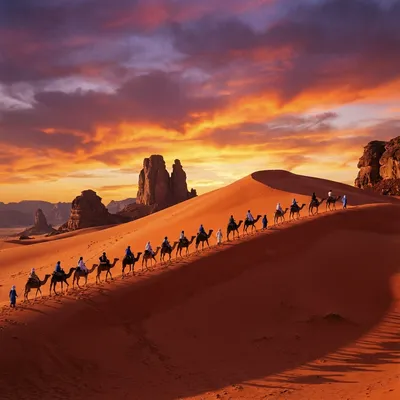
Geological formations, green oases and desert expanses create a spectacular natural tableau. Each season brings its share of visual surprises, from golden sunrises to starry nights without light pollution.

Best Time to Visit
High Season (October - March)
This is the ideal period with mild temperatures (15-28°C during the day). Nights are cool but pleasant. It’s the perfect time for hikes and exploration.
Intermediate Season (April - May, September)
Moderate temperatures, fewer tourists. Excellent value for money on accommodation and services.
To Avoid (June - August)
Extreme heat (40-50°C). Travel not recommended except for very experienced travelers with special preparation.
How to Get There
By Plane
Flight from Algiers to the nearest regional airport. Air Algérie and Tassili Airlines provide regular connections. Duration: 1h30-2h30 depending on destination.
By Road
National roads in good condition from major cities. 4x4 vehicle rental recommended for local exploration. Plan regular breaks and good fuel autonomy.

Accommodation
Boutique Hotels (€60-150/night)
Comfortable establishments with AC, restaurant and tourist services. Reservation recommended in high season.
Guesthouses (€30-60/night)
Authentic experience with locals. Cultural immersion and traditional cuisine.
Desert Bivouac (€40-100/night)
Traditional camps under the stars. Unforgettable experience with meals around the fire and local music.
Local Gastronomy
Traditional Dishes
- Friday couscous: Weekly family tradition
- Berber tajine: Vegetables and meat slowly simmered
- Méchoui: Roasted lamb for special occasions
- Traditional bread: Kesra cooked on stone
Regional Specialties
Each destination has its unique recipes passed down through generations.

Must-Do Activities
Hikes and Treks
2-7 day circuits with OPNT certified guides. Different difficulty levels adapted to all profiles.
Cultural Discovery
Visit historic sites, meet local artisans, participate in traditional ceremonies.
Photography
Exceptional conditions for landscape photography. Golden light at sunrise and sunset.
Astronomy
Light pollution-free sky (Bortle 1-2). Naked-eye Milky Way observation.
Practical Tips
Health and Safety
- Hydration: minimum 3 liters of water per day
- Sun protection: hat, glasses, SPF50+ cream
- Travel insurance with mandatory repatriation coverage
What to Pack
- Light and loose clothing (cotton recommended)
- Warm layers for cool nights
- Comfortable walking shoes
- Headlamp and spare batteries
Communication
Mobile network available in urban centers. WiFi in main hotels.
Traveler Testimonials
“A transformative experience. The silence of the desert, the generosity of the inhabitants, the extraordinary landscapes… I will come back.” — Marie L., France, 2024
“Our guide was exceptional. Every day brought new discoveries. Highly recommended!” — Thomas B., Belgium, 2024
Related Destinations to Explore
Ain Ouarka combines perfectly with these Saharan destinations for a complete circuit:
- Ain Sefra — Discover Ain Sefra, main regional hub
- Ksour Mountains — Explore Ksour Mountains, similar destination
Discover our complete Sahara destinations guide to plan your trip.
Conclusion: Why Visit Ain Ouarka


Ain Ouarka represents an exceptional Saharan destination that combines natural heritage, cultural richness and authenticity. Whether you’re passionate about adventure, photography, history or simply seeking total change of scenery, this region offers an unforgettable experience.
Our recommendations:
- ✅ Plan your trip 6-8 weeks in advance in high season
- ✅ Hire an OPNT certified guide for desert areas
- ✅ Prepare physically and bring appropriate equipment
- ✅ Respect the environment and local traditions
Ain Ouarka awaits you for an adventure in the heart of the authentic Algerian Sahara.