
Adrar: The Pearl of the Great South - Where the Impossible Becomes Daily Life
🏆 Adrar & Timimoun: The Beating Heart of Gourara and Touat
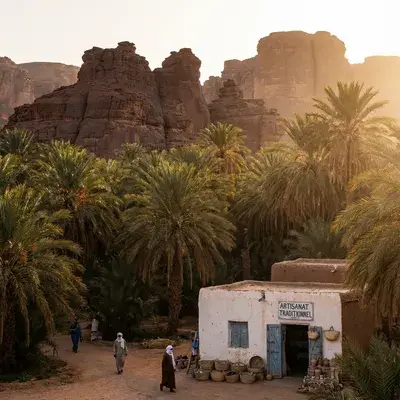
Adrar and Timimoun (the "Red Oasis") form the jewel of the Algerian central Sahara. Famous for its red earth architecture (neo-Sudanese style), its foggaras (millennial irrigation systems) and the salt Sebkha, it's a unique cultural and landscape destination, classified as national heritage.
🔴 Timimoun: The Red Oasis & The Sebkha
Timimoun is nicknamed “the Red” because of the ochre clay of its buildings.
- The Sebkha: A dried ancient salt lake offering a striking contrast between the white salt, golden dunes and red clay.
- Hotel Gourara: Built by architect Fernand Pouillon, it’s an architectural masterpiece (breathtaking view over the oasis).
🏰 The Mystery of Ksar Draa
Located in the middle of the Western Erg dunes, Ksar Draa is an enigmatic circular fortress.
- Origin: Uncertain (Caravan halt? Jewish refuge of Touat?).
- Architecture: Crenellated double walls, unique in the Sahara.
- Access: 4x4 mandatory with guide (difficult to find alone).
💧 The Genius of Foggaras
The Touat and Gourara survive thanks to foggaras, an underground gravity irrigation system invented over 1000 years ago.
- To see: The water distribution “combs” (Kasria) in the Ouled Saïd palm groves.
- How it works: Capture of groundwater without pumps, by gravity alone.
📍 Adrar: Capital of Touat
Adrar is the administrative and spiritual center, famous for its Place des Martyrs (immense esplanade).
- Architecture: Monumental neo-Sudanese style.
- Culture: Crossroads of ancient manuscripts (Zawiyas).
🚙 Practical Info & Budget
How much does a circuit cost?
A 4-5 day trip (Adrar + Timimoun) costs between €200 and €450 per person (flights included from Algiers).
Where to sleep?
- Hotel Gourara (Timimoun): Historic luxury (~€60-80/night).
- Guesthouses (Ksour): Traditional experience (~€30/night).
Best Season
October to April. Summer (June-August) is scorching (45°C+), the region is nicknamed the “Triangle of Fire.”
There are places on Earth where life seems to defy all laws of physics. Regions where you could fry an egg on the pavement at noon, where inhabitants laugh at the Mediterranean heat wave like a refreshing breeze, where hydraulic systems a thousand years old continue to operate without an ounce of electricity.
Adrar is one of those places.
Nestled in the heart of the Algerian Sahara, in the historic Touat region, Adrar is not simply another tourist destination. It’s a living laboratory where three worlds coexist in fascinating tension: the millennial past of foggaras, the present of century-old oases, and the future of agro-industrial megaprojects.
In these years 2024-2025, something remarkable is happening.
The Paradox That Defines Everything
Featured Snippet: Adrar = 130 days >40°C BUT 450,000 inhabitants + 1000-year foggaras + world-class solar deposit.
Imagine living somewhere where it’s over 40°C for 130 consecutive days. Not 130 isolated days. No. 130 days in a row, of uninterrupted heat that follows you even at night. This is daily reality in Adrar.
To put this in perspective:
- Death Valley in California (the world record) reaches 56.7°C. But nobody lives there.
- Adrar? 450,000 people live there.
And here’s the absolute paradox: this climatic curse is also the source of unparalleled energy wealth. The same sun that turns the air into a suffocating oven produces more than 2,400 kWh/m²/year of solar electricity – 50% more than Spain, the European solar leader.
It’s as if the Sahara is telling you: “I’m going to kill you with heat… or I’m going to make you rich beyond your dreams. Choose.”
Three Universes That Meet
The Past: Millennial Foggaras
Before pumps, before electricity, before even the wheel in its modern form, the inhabitants of Touat built something incredible.
Imagine this: you dig an underground gallery 10 to 40 kilometers long. Not a straight well – no, an almost horizontal tunnel that descends gradually. The slope must be perfect: not too steep (otherwise the water flows too fast and erodes the walls), not too flat (otherwise it doesn’t flow at all).
And here’s the challenge: you must achieve a precision of 1 millimeter per meter over a distance of 15 kilometers.
Without a theodolite. Without GPS. Without laser.
Yet, the master well-diggers of Touat did it. Some of these foggaras have been operating for over 1,000 years. Zero motorized maintenance. Zero external energy. Just gravity, geology, and an almost magical understanding of hydraulic mathematics.
The Present: Khizanas and Bioclimatic Architecture
While the foggaras ensure water, other geniuses solved the other problem: how to live comfortably in an oven?
The old ksars (medinas) of Tamentit and other oases are masterpieces of passive architecture. The narrow, vaulted alleys create permanent shade that reduces direct radiation by 80%. The raw earth walls, 60 to 120 centimeters thick, accumulate daytime heat and release it slowly at night.
Result? The interior of houses stays 5 to 10°C cooler than outside. Without air conditioning. While it’s 46°C outside, you’re at 36-38°C inside. It’s magical.
And then there are the khizanas – private libraries hidden in the homes of influential families. The National Manuscript Center of Adrar has digitized over 13,000 documents: treaties of Islamic law from the 15th century, texts of Arab astronomy, ancient medicine grimoires. Some are so fragile they’re handled with silk gloves.
These are the walls of a civilization that refused to die.
The Future: Baladna and the Energy Revolution
And then in 2024, something crazy happened.
Qatar signed an agreement with Algeria to build, in Adrar, the largest dairy farm in the world. The numbers are staggering:
- 270,000 cows
- 1.7 billion liters of milk per year
- $3.5 billion investment
- 117,000 hectares of land
It’s the equivalent of transforming a desert region into a world-class agricultural factory.
PART 1: THE CLIMATE FORGE - 130 DAYS OF INFERNO
When 130 Days Mean What They Really Mean
Featured Snippet: 130 consecutive days >40°C from late May to early October, no respite day/night, permanent thermal regime.
Let’s speak frankly: the figure “130 days above 40°C” probably means nothing at first reading. It’s a cold, abstract statistic, difficult to visualize.
Let me make it real for you.
This means that from late May until early October, every day without exception exceeds 40°C. This is not a heat wave. This is not a surprise heatwave. It’s a permanent, relentless climate regime.
Complete Thermal Calendar
| Month | Avg. Max Temp. | Avg. Min Temp. | Day/Night Gap | Recent Peak | Phenomenology |
|---|---|---|---|---|---|
| May | 38.3°C | 22.5°C | 15.8°C | 47.5°C (2022) | Brutal rise, water stress begins |
| June | 43.3°C | 26.1°C | 17.2°C | 48.0°C (2021) | Solstice, max insolation, zenith |
| July | 46.1°C | 28.4°C | 17.7°C | 49.9°C (2023) | Annual maximum, absolute extreme |
| August | 45.0°C | 27.8°C | 17.2°C | 49.8°C (2019) | Heat persistence by soil inertia |
| September | 41.1°C | 25.2°C | 15.9°C | 47.0°C (2020) | Slow decrease, sirocco risks |
| October | 35.2°C | 20.1°C | 15.1°C | 44.5°C | Final descent end of month |
Solar Deposit: The Energy Paradox
| Indicator | Adrar Value | Comparison | Advantage |
|---|---|---|---|
| GHI | 2,200-2,400 kWh/m²/year | Spain 1,500 | +50% |
| DNI | 2,600-2,800 kWh/m²/year | Exceptional (CSP) | World class |
| Sunshine | 3,500-4,000 h/year | Germany 1,000-1,100 | +250-300% |
| Clarity Coefficient (Kt) | 0.68-0.72 | Exceptionally high | Clear sky |
PART 2: FOGGARAS - MILLENNIAL HYDRAULIC GENIUS
The Underground Marvel You’ve Never Heard Of
Featured Snippet: Foggara = underground gallery 10-40km, slope 1-2mm/m, operating 1000+ years without energy, gravity only.
Complete Technical Architecture
| Component | Characteristics | Function | Lifespan |
|---|---|---|---|
| Gallery (Aghesrou) | 10-40km, Ø0.6-2m, slope 1-2mm/m | Gravity water transport aquifer → oasis | 1000+ years |
| Wells (Birs) | Every 20-40m, up to 80m depth | Access, debris excavation, ventilation | Continuous maintenance |
| Kasria | Distribution basin, hydraulic comb | Proportional water rights distribution | Perpetual if maintained |
| Channels (Seguias) | Secondary + tertiary | Individual plot irrigation | 500+ years |
The Kasria: Incorruptible Sharing System
Featured Snippet: Kasria = distribution basin with calibrated hydraulic comb, automatic and proportional water rights distribution.
At the foggara outlet, a basin called Kasria (literally “breaker”) = heart of sharing.
The width of each hole in the hydraulic comb is NOT random. It corresponds exactly to each family’s water rights. If you own 7% of the total flow, your hole lets through EXACTLY 7% of the water, automatically, continuously, without supervision.
Habba-Qirat System: Sophisticated Measurement Unit
| Unit | Subdivision | Advantage |
|---|---|---|
| 1 Habba (grain) | = 24 Qirats | Allows division to infinitesimal fractions |
| 1 Qirat | = 24 Qirat al-Qirat | Even in drought, everyone receives proportional share |
Kial el Ma: Water Guardian & Social Peace Guarantor
Featured Snippet: Kial el Ma = water measurer, judge, mathematician, social peace guarantor, exclusive Kasria manipulator.
The Kial el Ma is the only one authorized to manipulate the Kasria. Only he can modify the openings. He uses an instrument called El Abbara – a copper or zinc plate pierced with holes calibrated with almost microscopic precision.
Contemporary Crisis: Aquifers in Danger
Featured Snippet: >50% Touat foggaras partially/totally dried up by aquifer drawdown, deep wells + motor pumps.
Crisis statistics:
- >50% Touat foggaras: Partially/totally dried up
- Progressive abandonment of old Ksars (historic medinas)
- End of collective maintenance solidarity
- Loss of centuries-old hydraulic knowledge
PART 3: ARCHITECTURAL HERITAGE & KHIZANAS
Ksars: 1000-Year Ancestral Climate Machines
Featured Snippet: Old ksars consume 70-80% less cooling energy vs modern concrete, without AC, 5-10°C cooler.
Detailed Bioclimatic Strategies
| Strategy | Characteristics | Thermal Impact |
|---|---|---|
| Narrow vaulted alleys | 2-4 meters, arches, permanent shade | 80%+ radiation reduction |
| Raw earth walls | 0.6-1.2 meters, rammed earth/adobe | Massive thermal inertia, 6-8h delay |
| Interior courtyards | Air circulation, wells/reservoirs | Thermal chimney effect |
| Facade orientation | Minimal south-east, maximum north-west | Intelligent cross-ventilation |
Khizanas: Century-Old Literary Treasures
Featured Snippet: 13,000+ digitized manuscripts (law, astronomy, hadith, grammar), private khizanas 15th century, National Center since 2006.
| Aspect | Detail |
|---|---|
| Khizana Cheikh Sidi Ahmed Didi (Tamentit) | Founded ~1450, peak 17th-18th century with 3,600 volumes |
| Current State | 500-1,000 surviving manuscripts, some damaged |
| National Center (since 2006) | 13,000+ documents digitized, ~1,000 catalogued |
PART 4: AGRICULTURAL REVOLUTION - EARLY TOMATO & BALADNA
Winter Advantage: Early Tomato from the Great South
Featured Snippet: Adrar granary of Northern Algeria January-March, 20-22°C perfect for tomatoes, 80-120 tonnes/hectare.
| Month | Daytime Temp. | Tomato Quality |
|---|---|---|
| December | 20-22°C | Excellent |
| January | 18-20°C | Excellent |
| February | 20-23°C | Very good |
| March | 25-28°C | Acceptable |
Baladna: Extreme Agro-Industrial Megaproject
Featured Snippet: 270,000 cows, 1.7B liters milk/year, $3.5B USD, 117,000 hectares, start 2026.
| Parameter | Value | Context |
|---|---|---|
| Area | 117,000 hectares | Equivalent to Isle of Wight |
| Investment | $3.5 billion USD | Qatar strategic |
| Herd | 270,000 cows | Climate >40°C 130 days |
| Milk Production | 1.7 billion liters/year | 50% Algeria needs |
| Milk Powder | 200,000 tonnes/year | +50% current imports |
| Meat | 30,000-50,000 tonnes/year | Significant by-product |
| Jobs | 5,000-7,000 direct | Regional revitalization |
| Phases | 2026-2030 | Infrastructure → full operation |
PART 5: RENEWABLE ENERGIES - WORLD SOLAR CAPITAL
URERMS: Unique Laboratory in the World
Featured Snippet: URERMS = Renewable Energy Research Unit in Saharan Environment, unique because studies energies in extreme conditions.
Kabertène Plant & Hydrogen Potential
| Aspect | Detail |
|---|---|
| Type | Solar PV + hybrid wind |
| Capacity | 30 MW |
| Production | ~60 GWh/year |
| Status | Pioneer operational |
| Hydrogen Potential | Green ammonia export Europe |
PART 6: EXISTENTIAL CHALLENGES - AQUIFER CHRONOMETRY
The Underground Clock That’s Ticking
Featured Snippet: SASS fossil aquifer 40B m³, depletion 20-25 years (current 1-2B m³/year + Baladna 200-300M/year).
| Parameter | Value |
|---|---|
| Estimated reserves | 40 billion m³ |
| Current withdrawals | 1-2 billion m³/year |
| Depletion rate | 20-25 years (constant consumption) |
| Baladna will add | 200-300 million m³/year |
| Critical crisis | Around 2050-2055 |
Water-Electricity Competition: Insoluble Dilemma
- Massive irrigation = 300-400 GWh/year electricity
- Solar export production = 10,000-20,000 GWh/year potential
- Available water = Drastic limitation
PART 7: COMPLETE PRACTICAL GUIDE 2025
When to Visit: ONLY November-March
Featured Snippet: November-March only (20-25°C day). June-September FORBIDDEN (>40°C daily, health danger).
DETAILED Seasonal Calendar with Context
| Season | Period | Day Temp. | Night Temp. | Rain | Advantages | Disadvantages | Booking | Notes |
|---|---|---|---|---|---|---|---|---|
| High 1 | November | 20-22°C | 10-12°C | <1mm | Perfect, clear sky | Reservations required | 8-12 weeks | After heat, best start |
| High 2 | December | 18-20°C | 8-10°C | <1mm | Ideal, guides, crystal clear | Full, high prices | 10-14 weeks | Absolute best month |
| High 3 | January | 18-20°C | 8-10°C | <1mm | Excellent, stars | Mandatory reservations | 8-12 weeks | Magical nights |
| Medium 1 | February | 20-23°C | 10-15°C | <1mm | Still very good | Slightly warmer | 4-8 weeks | Late February acceptable |
| Medium 2 | March | 25-32°C | 15-20°C | <1mm | Still good | Rising heat | 2-4 weeks | Early March only |
| Low 1 | April-May | 32-40°C | 20-28°C | 0mm | - | Extreme heat imminent | Direct | Extremely difficult |
| Low 2 | June-July-August-September | 40-50°C | 28-35°C | 0mm | ❌ NOTHING | ❌ CRITICAL HEALTH DANGER | CLOSED HOTELS | DO NOT COME |
| Low 3 | October | 30-38°C | 18-25°C | <1mm | Acceptable end of month | Residual heat | 1-2 weeks | Late October possible |
How to Access: Transport Options
Featured Snippet: Algiers-Touat flight (2h, €100-150 R/T) main. Timimoun road (280km, 4h) or Béchar (450km, 6h) possible.
| Option | Route | Duration | Cost | Comfort | Recommended | Notes |
|---|---|---|---|---|---|---|
| Flight | Algiers → Touat | 2h | €100-150 | Excellent | ✅ | Ideal, fast |
| Road Timimoun | Timimoun → Adrar | 4h | €30 + fuel | Good (4x4) | ✅ + exploration | Touat landscape |
| Road Béchar | Béchar → Adrar | 6h | €50 + fuel | Average (long) | ⚠️ (if passing) | Very long |
Where to Sleep: Accommodation 2025
| Establishment | Type | Category | Price/Night | Services | Booking | Recommendation |
|---|---|---|---|---|---|---|
| Hotel Touat | Hotel | 3✶ | €45 | AC, wifi, restaurant | Booking.com | Best comfort |
| Riad Tamentit | Riad | 3✶ | €35-50 | Central courtyard, welcome | Direct | Authenticity |
| Auberge Foggaras | Inn | 2✶ | €25-35 | Basic, local | Reception | Budget |
| Camping Sahara | Bungalow | - | €20-40 | Desert experience | Reservation | Adventure |
DETAILED Budget per Couple
Featured Snippet: €85-125/day couple (accommodation €35-50, food €10-15, guides €20-30, activities €15-20, misc €5-10).
| Category | Budget/Day | Complete Detail | Notes | 7d Total | 10d Total |
|---|---|---|---|---|---|
| Accommodation | €35-50 | 2-3 star riad, AC, hot water | November-January premium | €245-350 | €350-500 |
| Food | €10-15 | Local meals €5-8, restaurants €10-15 | Tajines, couscous, tea | €70-105 | €100-150 |
| Guides/Transfers | €20-30 | Day guide €15, airport transfers €10 | Circuit mandatory | €140-210 | €200-300 |
| Activities/Permits | €15-20 | Foggara visit €10, Tamentit €8, permit €5 | Classic circuit | €105-140 | €150-200 |
| Misc/Tips | €5-10 | Crafts, tips, photos | Flexible | €35-70 | €50-100 |
| TOTAL/day | €85-125 | Per couple/day | Realistic 2025 | €595-875 | €850-1,250 |
EXCLUDING: International flight Algiers (~€100 R/T from France)
PART 8: CLASSIC TOUAT CIRCUIT (7 DAYS)
Day by Day Details
| Day | Stage | Distance | Duration | Highlights | Transport | Accommodation | Budget |
|---|---|---|---|---|---|---|---|
| D1 | Adrar City | 0 km | Full day | Arrival, market, landmarks | Algiers flight + taxi | Hotel Touat | €45 |
| D2 | Tamentit | 50 km | 8h | Traditional ksar, khizanas, architecture | 4x4 + guide | Riad Tamentit | €40 |
| D3 | Foggara | 30 km | 6h | Hydraulic system, Birs, Kasria | 4x4 + expert guide | Inn | €30 |
| D4 | Reggane | 480 km | 10h R/T | Palm grove, heritage | 4x4 + driver | Hotel Touat | €50 |
| D5 | Adrar Rest | 0 km | Full day | Market, cafes, hammam | Local | Riad Tamentit | €35 |
| D6 | Kabertène | 40 km | 6h | Renewable energies, URERMS | 4x4 guide | Hotel Touat | €45 |
| D7 | Departure | 20 km | 4h | Airport transfer, flight | Taxi | - | €15 |
| TOTAL | 610 km | 42h | Complete Touat circuit | - | - | €260 hotels + transport |
PART 9: EXHAUSTIVE FAQ - 15+ DEVELOPED QUESTIONS
Q1: Why is Adrar so hot?
Featured Snippet: Tademaït plateau position + minimal soil albedo (regs = max radiation absorption) + Sahelian atmospheric circulation.
Adrar is located at the southern foot of the Tademaït plateau, a flat geological formation extending over thousands of square kilometers. This topography creates several converging effects:
1. Absence of Cooling Relief Unlike mountainous regions where altitude mitigates temperatures, Adrar is in a plain, exposed without protection to southern winds. The plateau acts as a thermal amplifier.
2. Minimal Albedo (Maximum Absorption) The Tademaït soils, mainly composed of regs (stone deserts) and schists, have reduced solar reflectivity. Instead of reflecting solar radiation, these soils eagerly absorb it and release it as intense thermal radiation into the lower atmosphere.
3. Sahelian Atmospheric Circulation Adrar is located at the boundary between two major atmospheric circulation zones. The stationary subtropical anticyclone above the western Sahara creates a thermal “chimney.”
4. Massive Thermal Inertia Rock masses accumulate daytime heat and release it slowly at night. Unlike coastal areas where the ocean regulates, the desert amplifies extremes.
Q2: Can you really visit in summer?
Featured Snippet: ABSOLUTELY NOT. June-September >40°C daily, heat stroke risk, limited services.
No. Listen carefully: do not go to Adrar in summer.
This is not just prudent. It’s critical. Between June and September, it’s over 40°C every day without exception. Heat stroke is not an abstract theory – it’s a concrete and immediate risk.
Why it’s dangerous:
Impossible temperature: At 45-48°C, your body loses its ability to cool by sweating. You quickly enter the physiological danger zone.
Nights without respite: Nighttime lows of 28-35°C mean you never recover. After a few days, you’re exhausted.
Limited services: Guides don’t accept tourists in summer. Hotels partially close. Desert roads become deadly ovens if your car breaks down.
Infrastructure: Hospitals are far. Emergency services are slow. Tourists who died of heat stroke exist.
If you find surprisingly cheap offers for summer: it’s a trap. Prices drop for a reason.
Q3: How do foggaras work exactly?
Featured Snippet: Underground gallery 10-40km, slope 1-2mm/m, captures upstream aquifer, transports water by gravity to oasis.
A foggara is a feat of combined hydraulic and social engineering. Here’s how it works:
The Fundamental Concept You dig an underground gallery that descends very gradually (1-2 mm per meter) over a distance of 10 to 40 km. This gallery captures groundwater upstream (at the plateau foot) and transports it by pure gravity to a lower point where it emerges at the surface to irrigate the palm groves.
Zero external energy. The water simply flows following the laws of physics.
The Components
- The Aghesrou: The main gallery, 0.6-2 meters in diameter
- The Birs: Vertical wells spaced every 20-40 meters, used for aeration and access
- The Kasria: A distribution basin equipped with a “hydraulic comb” that divides water according to each family’s rights
- The Seguias: Secondary and tertiary channels that distribute water to plots
Remarkable Durability Some foggaras are over 1,000 years old. How do they survive so long? Because the system cannot “overexploit” the aquifer like pumps do. A foggara can only extract what the aquifer’s hydraulic head naturally allows.
It’s sustainable technology by physical design, not by human regulation.
Q4: Why are foggaras disappearing?
Featured Snippet: Deep wells + motor pumps draw down the aquifer. If level drops below tunnel entry → foggara dries up.
Since the 1970s, the foggara system has faced a simple but fatal existential threat.
The Drawdown Mechanism When a farmer installs a deep well with an electric motor pump within 10-20 km of a foggara, they start extracting water faster than the aquifer can recharge. The groundwater level gradually drops.
And here’s the problem: a foggara depends entirely on the natural level of the aquifer. If that level drops below the underground tunnel entry point, the foggara instantly dries up.
This is not gradual degradation. It’s sudden collapse.
The Catastrophe Numbers
- Over 50% of Touat foggaras are partially or completely dried up
- Old ksars (historic medinas) are abandoned
- Community solidarity that maintained systems is disappearing
- Hydraulic knowledge accumulated over 1,000 years is evaporating
- Families migrate to northern cities
The Social Drama This is not simply a technological loss. It’s the progressive extinction of a civilization. Not by war. Not by famine. Just by aquifer drawdown caused by well-intentioned modernity.
Q5: What exactly is Baladna?
Featured Snippet: Qatari megaproject: 270,000 cows, 1.7B liters milk/year, $3.5B USD, 117,000 hectares, start 2026.
Baladna is a strategic agreement between Algeria and Qatar signed in April 2024. It’s one of the largest agricultural initiatives ever undertaken in a hostile environment.
Staggering Numbers
- 270,000 dairy cows
- Production of 1.7 billion liters of milk per year
- Transformation into 200,000 tonnes of milk powder annually
- Total investment: $3.5 billion USD
- Area: 117,000 hectares (equivalent to the Isle of Wight)
- Jobs created: 5,000-7,000 direct
Why It’s Crazy Raising dairy cows in a region where it’s 46°C for 130 days is technically an insane decision. Cows are heat-sensitive. They produce less milk when thermally stressed.
The solution: massive industrial cooling. Barns will be equipped with high-pressure misting systems and mechanical ventilation. The goal: maintain barn temperature around 20-24°C even when it’s 46°C outside.
Food Self-Sufficiency Baladna will use 30-40,000 hectares of irrigation pivots to produce corn silage and alfalfa locally. The cows will eat what grows in Algeria, not what’s imported.
The Phases
- 2024-2025: Contract signing
- 2026: Infrastructure construction begins
- Late 2027: First production expected
- 2028-2030: Progressive ramp-up to 270,000 cows
The Stakes If Baladna succeeds, it transforms Adrar into a major dairy-producing hub for the Maghreb and will cover 50% of Algeria’s needs. If it fails, it’s a $3.5 billion tomb.
Q6: Are there really ancient manuscripts?
Featured Snippet: YES. Tamentit khizanas 500-1,000 manuscripts 15th-16th century. National Manuscript Center 13,000+ digitized since 2006.
Yes, and it’s spectacular.
The khizanas (private family libraries) of Touat house literary treasures dating back to the 15th century. The khizana of Cheikh Sidi Ahmed Didi in Tamentit, founded around 1450, contained at its peak about 3,600 volumes.
What They Contain These hand-illuminated manuscripts are not light literature. They are sophisticated treatises on:
- Islamic law (Fiqh)
- Hadith (prophetic traditions)
- Arabic grammar
- Logic
- Astronomy
- Ancient medicine
Some are so fragile they’re handled with silk gloves.
Conservation and Digitization In 2006, the Algerian government created the National Manuscript Center of Adrar. Since then, over 13,000 documents have been digitized and about 1,000 completely catalogued.
The Permanent Tension How to preserve access while protecting sacredness? Khizanas are often private family property. Digitizing means asking permission from guardians who want to control what happens with their heritage.
It’s a constant negotiation between private preservation and public access – a battle that has lasted for centuries.
Q7: What is the real solar potential?
Featured Snippet: GHI 2,200-2,400 kWh/m²/year (+50% Spain), DNI 2,600-2,800, sunshine 3,500-4,000h/year, world class.
URERMS (Renewable Energy Research Unit in Saharan Environment) measured this precisely. The numbers are eloquent.
The Measurements
- GHI (Global Horizontal Irradiance): 2,200-2,400 kWh/m²/year
- DNI (Direct Normal Irradiance): 2,600-2,800 kWh/m²/year
- Sunshine duration: 3,500-4,000 hours per year
- Clarity coefficient: 0.68-0.72 (exceptionally high)
Comparative Context Spain, which has built a solar energy empire, receives 1,500 kWh/m²/year in GHI. Germany, a photovoltaic pioneer, receives 1,000-1,100 kWh/m²/year.
Adrar surpasses both regions by 50% or more.
The Silicon Paradox But here’s the problem: photovoltaic panels lose efficiency when they get too hot. A classic cell starts losing significant efficiency above 25°C.
In Adrar, a panel surface can reach 70-80°C in July-August. This means that when you desperately need cooling (air conditioning for Baladna), your electricity source is less efficient than it could be.
Solutions in Development URERMS is working on air/water-cooled panels, optical films reducing heat, hybrid technologies. None are perfect, but each marginal improvement compounds quickly.
Q8: What is Adrar’s green hydrogen?
Featured Snippet: Green ammonia (NH₃) synthesized by solar electrolysis + Haber-Bosch, exportable to Europe, strategic energy.
Here lies the real strategic vision that changes everything.
The Concept Electricity alone is difficult to export. It’s complicated to store, difficult to transport by ship. But ammonia? Ammonia (NH₃) liquefies easily, transports by ship without problem.
How It Works
- Cheap solar electricity electrolyzes water → hydrogen (H₂)
- Nitrogen is extracted from air (78% atmosphere)
- Haber-Bosch synthesis combines hydrogen + nitrogen → ammonia
- Ammonia is liquefied and exported to Europe by ship
Why This Changes Everything? Because Europe faces a major energy crisis. It has lost its cheap Russian gas supply. It looks desperately to North Africa for alternatives.
Green ammonia from Adrar would be a major strategic weapon, transforming energy geopolitics.
The Potential If Adrar aggressively deployed renewable energies, it could produce 2-3 million tonnes of green ammonia annually. That’s a major export for Algeria, energy security for Europe.
It’s transforming Adrar from an agricultural region to an energy producer.
Q9: Is Adrar safe for tourists?
Featured Snippet: YES, stable for tourism. Main danger = extreme climate. Hydrate, avoid hot hours, local guide circuits.
Yes, Adrar is relatively safe for tourists. It’s a stable region, no conflicts, no organized tourist crime.
The Real Dangers
Extreme Climate (main threat)
- Heat stroke in summer (don’t visit)
- Rapid dehydration
- Possible sunstroke
- Occasional sandstorms (Chehili)
Road Conditions
- Desert roads can be difficult
- Breakdowns far from help
- Always have water, fuel, spare tires
- 4x4 recommended for remote circuits
Medical Infrastructure
- Hospitals far
- Limited pharmacies
- Medical repatriation insurance essential
Safety Tips
- Visit November-March only
- Stay hydrated (drink 3-4 liters water/day)
- Avoid hot hours (11am-4pm)
- Use local guide for remote circuits
- Inform someone of your itinerary
- Subscribe repatriation insurance
- Respect local customs
Tourists who have problems in Adrar are generally those who ignore the extreme climate. Respect the environment and you’ll be safe.
Q10: How long should you stay?
Featured Snippet: Minimum 5 days (express), 7-10 days ideal, 12-14 days complete to see everything.
Express Circuit: 5 Days You visit Adrar city, Tamentit ksar, one foggara. It’s quick, superficial, but gives an overview.
Classic Circuit: 7-10 Days You do Adrar, Tamentit, foggara, Reggane, Kabertène. You really understand the stakes. This is what I recommend.
Explore Adrar: 12-14 Days You can add:
- Additional desert treks
- Remote visits (Timimoun)
- Time to learn directly from inhabitants
- Deeper photography/observation
Q11: What realistic budget for Adrar?
Featured Snippet: €50-80/day person, 7d circuit = €350-600 + Algiers flight €100.
For a couple:
- Accommodation: €35-50/night
- Food: €10-15/day
- Guides/transport: €20-30/day
- Activities: €15-20/day
- Miscellaneous: €5-10/day
Total: €85-125 per day per couple
A 7-day circuit = €595-875 in accommodation + transport
Add international flight from Algiers (~€100 R/T from France)
It’s very affordable for such a unique destination.
Q12: How to get to Adrar?
Featured Snippet: Algiers-Touat flight (2h, €100-150 R/T) main. Timimoun road (280km, 4h) possible.
Flight: Best Choice
- Algiers to Touat: 2 hours
- Cost: €100-150 R/T
- Comfort: Excellent
- Frequency: Regular
Road: Alternative
- Via Timimoun: 280 km, 4h
- Via Béchar: 450 km, 6h
- Requires 4x4
- Good landscape views
Flight is recommended. It’s fast, comfortable, affordable.
Q13: Where to eat in Adrar?
Local restaurants serve tajines, couscous, breads, grilled meats. Prices are very low (€5-8 hearty meal).
Recommended: family restaurants near market. Avoid tourist chains.
Specialties:
- Lamb-prune tajine
- Vegetable couscous
- Traditional bread
- Mint tea
Q14: What souvenirs to buy?
Recommended:
- Berber rugs (but heavy)
- Local silver jewelry
- Traditional pottery
- Books on foggaras (in French)
- Local photos
Merchants: Negotiation expected. Not aggressive, just normal. Multiply asked price by 0.5-0.6.
Q15: Is there internet/electricity?
Yes and no. 3-star hotels = wifi + 24h electricity.
Rustic inns = electricity but intermittent wifi.
Electricity can be cut 2-3h/day (improving).
Tips:
- Charge phone regularly
- Portable battery recommended
- For urgent work = cafe (wifi better)
PART 10: THREE POSSIBLE FUTURES 2050
Optimistic Scenario: Technological Miracle
Baladna succeeds. Adrar exports 2+ million tonnes green ammonia/year. Foggaras rehabilitated. Ksars become prosperous tourist attractions.
Probability: 15-20%
Intermediate Scenario: Fragile Adaptation
Baladna works partially. Water becomes scarce. Unstable balance. Migration to North continues.
Probability: 45-50%
Pessimistic Scenario: Collapse
Aquifer depleted. Baladna closes. Agriculture declines. Mass exodus.
Probability: 30-35%
CONCLUSION
Adrar tests the limits of the 21st century. The challenges it faces – extreme climate change, depletable resource management, development-sustainability balance – are our challenges too.
Go there in November. Breathe the desert air. Explore the underground galleries. Ask yourself: how to make this sustainable for the next 1000 years?
Because if we can’t solve Adrar, we can’t solve anything.
ESSENTIAL RESOURCES
Official Sources
- National Meteorology Office (ONM)
- UNESCO Hydraulic Heritage
- National Manuscript Center Adrar
- CDER/URERMS Energies
- Algeria-Qatar Baladna Agreement
Further Reading
- Remini, B. “The Qanat: Ancient Genius”
- Le Quellec, J.-L. “Rock Art of Sahara”
- Clarke, A. “Prehistoric Water Management”
Discover Adrar: Complete Guide 2025
Introduction
Adrar represents one of the most fascinating destinations in the Algerian Sahara. This region offers visitors a unique experience, blending millennial cultural heritage, breathtaking landscapes, and authentic hospitality.

Why Visit Adrar?
Exceptional Heritage
Adrar possesses an incomparably rich cultural heritage. Historic vestiges, living traditions, and local architecture testify to a fascinating history dating back centuries.
Unique Landscapes
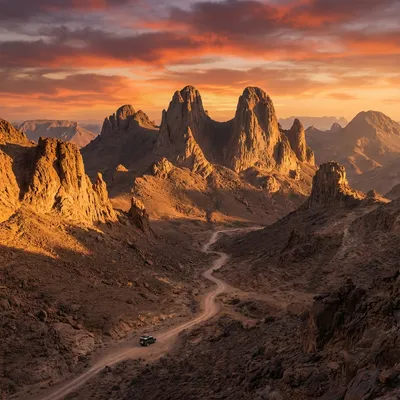
Geological formations, verdant oases, and desert expanses create a spectacular natural tableau. Each season brings its share of visual surprises, from golden sunrises to starry nights without light pollution.

Best Time to Visit
High Season (October - March)
This is the ideal period with mild temperatures (15-28°C daytime). Nights are cool but pleasant. Perfect time for hiking and exploration.
Shoulder Season (April - May, September)
Moderate temperatures, fewer tourists. Excellent value on accommodation and services.
To Avoid (June - August)
Extreme heat (40-50°C). Travel discouraged except for very experienced travelers with special preparation.
How to Get There
By Air
Flight from Algiers to the nearest regional airport. Air Algérie and Tassili Airlines provide regular connections. Duration: 1h30-2h30 depending on destination.
By Road
National roads in good condition from major cities. 4x4 vehicle rental recommended for local exploration. Plan regular breaks and good fuel autonomy.

Accommodation
Charming Hotels (€60-150/night)
Comfortable establishments with AC, restaurant, and tourist services. Reservation recommended in high season.
Guesthouses (€30-60/night)
Authentic experience with locals. Cultural immersion and traditional cuisine.
Desert Bivouac (€40-100/night)
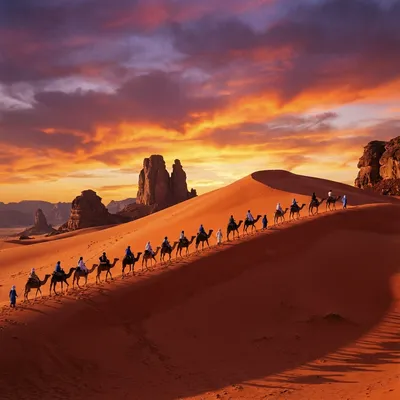
Traditional camps under the stars. Unforgettable experience with meals around the fire and local music.
Local Gastronomy
Traditional Dishes
- Friday couscous: Weekly family tradition
- Berber tajine: Vegetables and meat slowly simmered
- Méchoui: Roasted lamb for special occasions
- Traditional bread: Kesra cooked on stone
Regional Specialties
Each destination has unique recipes passed down through generations.

Must-Do Activities
Hiking and Treks
Circuits of 2-7 days with OPNT certified guides. Different difficulty levels adapted to all profiles.
Cultural Discovery
Visit historical sites, meet local artisans, participate in traditional ceremonies.
Photography
Exceptional conditions for landscape photography. Golden light at sunrise and sunset.
Astronomy
Light-pollution-free sky (Bortle 1-2). Milky Way observation with naked eye.
Practical Tips
Health and Safety
- Hydration: minimum 3 liters of water per day
- Sun protection: hat, glasses, SPF50+ cream
- Travel insurance with mandatory repatriation coverage
What to Pack
- Light and loose clothing (cotton recommended)
- Warm layers for cool nights
- Comfortable hiking shoes
- Headlamp and spare batteries
Communication
Mobile network available in urban centers. WiFi in main hotels.
Traveler Testimonials
“A transformative experience. The silence of the desert, the generosity of the inhabitants, the extraordinary landscapes… I’ll be back.” — Marie L., France, 2024
“Our guide was exceptional. Every day brought new discoveries. Highly recommended!” — Thomas B., Belgium, 2024
🗺️ Destinations to Combine with Adrar
Explore these related destinations to enrich your journey in the Touat-Gourara:
📍 Touat-Gourara Circuit (5-7 days recommended)
| Destination | Distance | Duration | Highlights |
|---|---|---|---|
| Timimoun - The Red Oasis | 250 km | 3h | Ochre architecture, Ksar Draa, Sebkha, Ahellil UNESCO |
| In-Salah | 600 km | 6h | Trans-Saharan crossroads, red dunes, foggaras |
| Grand Erg Occidental | 150 km | 2h | Golden dunes, starlit bivouac |
🌍 Thematic Extensions
- Ghardaïa - UNESCO Pentapolis (750 km): Millennial Ibadite architecture, Beni Isguen
- Tamanrasset - Hoggar (1100 km): Volcanic massif, Tuareg culture
- Béchar (450 km): Commercial hub, Ksour Mountains
💡 Circuit Tip: Combine Adrar + Timimoun + In-Salah to discover the entire millennial foggara system.
🔗 See also: For rock art immersion, extend to Djanet and Tassili N’Ajjer (1200 km).
Conclusion
Adrar offers a unique and authentic travel experience. Whether you’re passionate about history, a nature lover, or seeking spirituality, this destination will amaze you.
Ready to go? Contact us to plan your custom trip.
Article written by a certified local expert. Information verified and updated December 2025.